
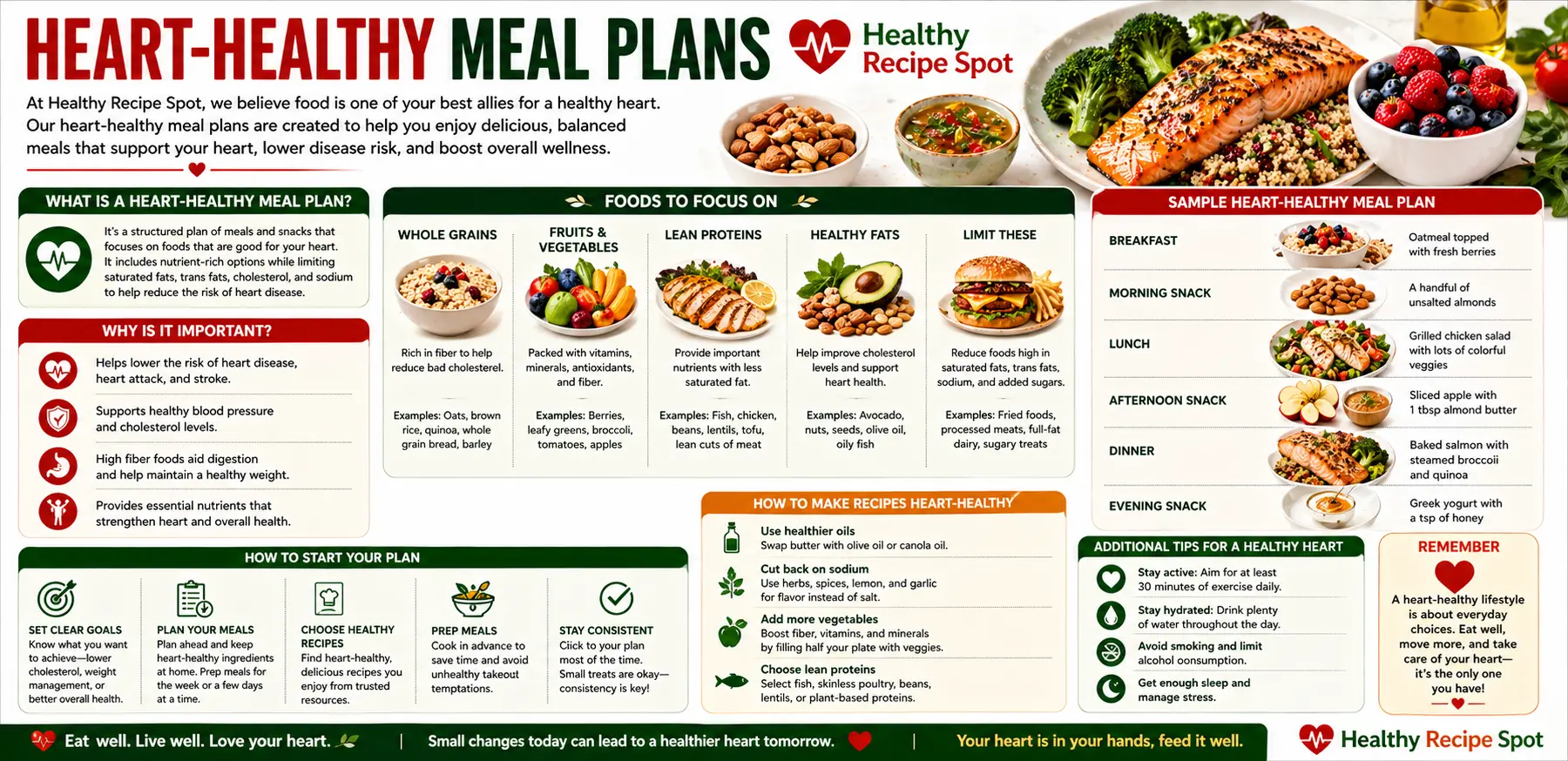
At Healthy Recipe Spot, we believe that the foundation of a strong and healthy heart starts with the food you eat. By choosing nutrient-dense ingredients like fruits, vegetables, whole grains, and lean proteins, you can support your heart and overall well-being. Our Heart-Healthy Meal Plans are designed to help you maintain a balanced diet that provides essential nutrients while promoting long-term cardiovascular health.
For more articles
What Is a Heart-Healthy Meal Plan?
A Heart-Healthy Meal Plan is a structured approach to eating that focuses on foods beneficial for heart health. It emphasizes nutrient-rich options while limiting foods high in saturated fats, trans fats, cholesterol, and sodium. Following this type of plan can lower the risk of heart disease and improve overall health.
Why Is a Heart-Healthy Meal Plan Important?
Eating the right foods plays a major role in preventing and managing heart disease. Poor dietary habits—especially those high in unhealthy fats—can lead to blocked arteries, increasing the risk of heart attacks and strokes.
On the other hand, heart-friendly foods help:
- Lower cholesterol levels
- Maintain healthy blood pressure
- Support digestion with fiber-rich choices
- Manage weight by promoting fullness and reducing overeating
Conditions such as coronary artery disease, heart failure, and arrhythmias are often linked to long-term dietary patterns, making healthy eating essential.
Foods to Include in a Heart-Healthy Meal Plan
A balanced Heart-Healthy Meal Plan typically includes:
Whole Grains
Foods like oats, brown rice, and quinoa are high in fiber, which helps reduce bad cholesterol levels.
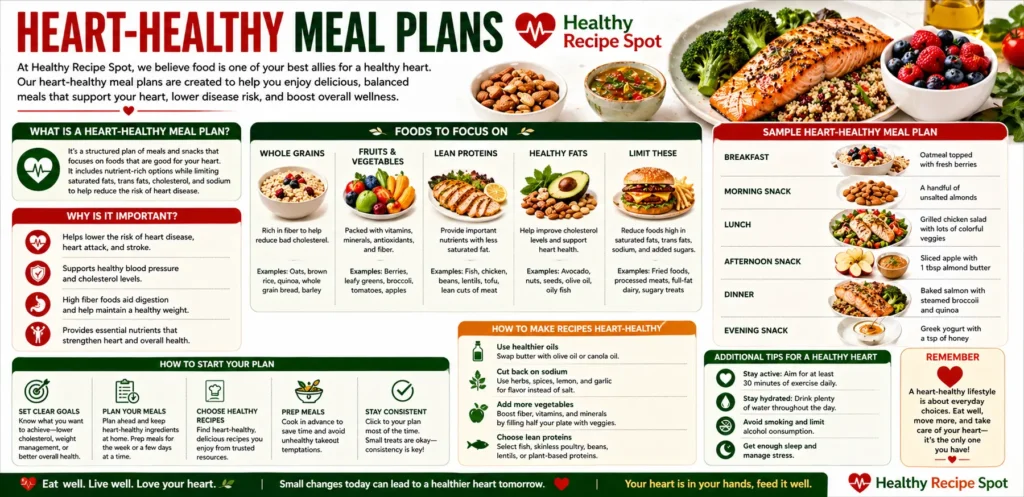
Fruits and Vegetables
Rich in vitamins, minerals, and antioxidants, these foods support heart health and help control inflammation and blood pressure.
Lean Proteins
Options such as poultry, fish, legumes, and lean cuts of meat provide essential nutrients without excess saturated fat.
Healthy Fats
Sources like nuts, seeds, avocados, and oily fish contain beneficial fats that can improve cholesterol levels.
Sample Heart-Healthy Meal Plan
Here’s an example of a typical day:
- Breakfast: Oatmeal topped with fresh berries
- Morning Snack: A small handful of unsalted almonds
- Lunch: Grilled chicken salad with a variety of vegetables
- Afternoon Snack: Apple slices with almond butter
- Dinner: Baked salmon with steamed broccoli and quinoa
- Evening Snack: Greek yogurt with a drizzle of honey
How to Start a Heart-Healthy Meal Plan
Getting started is simple with a bit of preparation:
- Set your goals: Decide whether you want to lower cholesterol, lose weight, or improve overall health
- Plan ahead: Organize your meals for the week to avoid unhealthy choices
- Choose the right recipes: Use reliable sources like Healthy Recipe Spot for inspiration
- Prepare meals in advance: This helps reduce reliance on fast food
- Stay consistent: Long-term habits matter more than short-term perfection
How to Make Your Recipes Heart-Friendly
You don’t have to give up your favorite meals—just adjust them:
- Replace butter with healthier oils like olive oil
- Cut back on salt and use herbs and spices for flavor
- Add more vegetables to increase fiber and nutrients
- Choose lean or plant-based proteins instead of fatty meats
Final Thoughts
Maintaining heart health is about making consistent, balanced choices. A Heart-Healthy Meal Plan can help you reduce risk factors, improve your overall well-being, and support a healthier lifestyle.
In addition to eating well, regular exercise, avoiding smoking, and limiting alcohol intake are also key. Take small steps, stay consistent, and remember—taking care of your heart starts with what’s on your plate.
- Vitamins and Minerals Why Your Body Needs Them and How to Get Enough Every Day
- Meal Planning Ideas A Complete Guide to Saving Time Eating Healthier and Reducing Stress
- Nutrition for Fitness A Complete Guide to Fueling Your Body for Better Performance
- Clean Eating Habits A Practical Guide to Healthier Everyday Nutrition
- Superfoods Benefits How Nutrient-Rich Foods Can Improve Your Health
