
Introduction
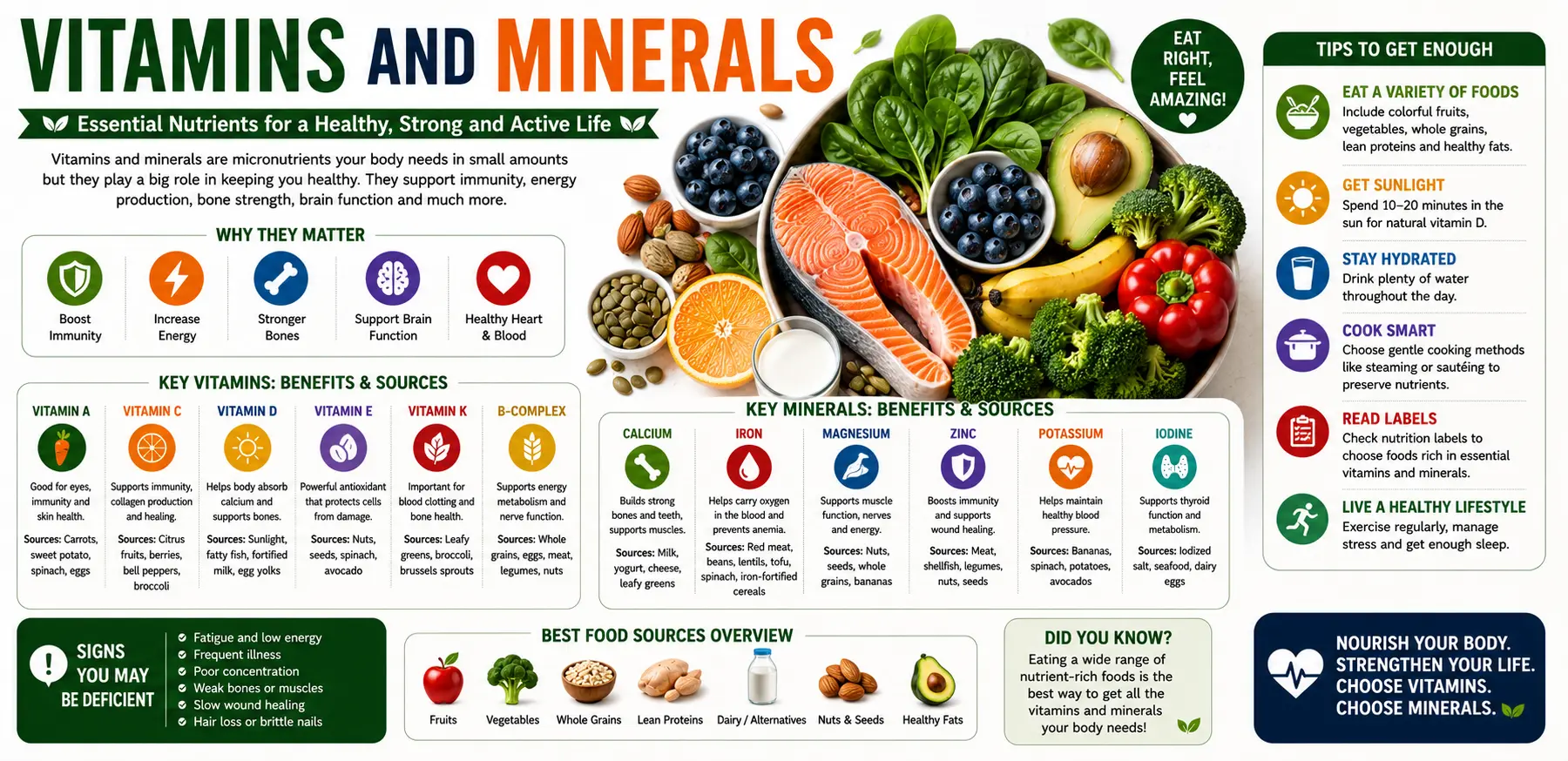
Many people focus on calories, protein, carbohydrates, and fats when thinking about nutrition. While these nutrients are important, vitamins and minerals are equally essential for maintaining good health. Even though the body only needs small amounts of these nutrients, they play a major role in keeping every system functioning properly.
FOR MORE SOLUTIONS VISIT
Vitamins and minerals support immunity, energy production, bone health, brain function, muscle performance, and many other vital processes. When the body does not receive enough of these nutrients, it can lead to fatigue, weakened immunity, poor concentration, and other health issues.
The challenge is that many people unknowingly fall short of their daily nutrient needs. Busy lifestyles, poor dietary choices, and overreliance on processed foods can make it difficult to consume a balanced diet rich in essential nutrients.
This guide explains the importance of vitamins and minerals, common causes of deficiencies, practical solutions, advanced nutrition strategies, prevention tips, and answers to frequently asked questions.
Main Causes of Vitamin and Mineral Deficiencies
1. Poor Dietary Habits
One of the most common reasons for nutrient deficiencies is consuming a diet low in fruits, vegetables, whole grains, and other nutrient-rich foods.
When highly processed foods dominate the diet, essential nutrients are often lacking.
2. Limited Food Variety
Eating the same foods repeatedly can reduce the range of nutrients consumed.
Different foods provide different vitamins and minerals, so variety is important for overall nutritional balance.
3. Skipping Meals
Skipping meals can reduce daily nutrient intake and make it harder to meet nutritional requirements.
Consistent eating habits generally support better nutrient consumption.
4. Certain Medical Conditions
Some digestive disorders and health conditions may affect the body’s ability to absorb nutrients efficiently.
In these situations, individuals may require additional nutritional support.
5. Increased Nutritional Needs
Certain life stages and situations may increase nutrient requirements, including:
- Pregnancy
- Aging
- Intense physical activity
- Recovery from illness
Meeting these increased demands is important for maintaining health.
Step-by-Step Solutions
Step 1: Understand the Difference Between Vitamins and Minerals
Vitamins are organic compounds that support many body functions.
Common vitamins include:
- Vitamin A
- Vitamin C
- Vitamin D
- Vitamin E
- Vitamin K
- B vitamins
Minerals are inorganic nutrients that the body also needs for proper function.
Examples include:
- Calcium
- Iron
- Magnesium
- Potassium
- Zinc
- Phosphorus
Both vitamins and minerals are essential for good health.
Step 2: Eat More Fruits and Vegetables
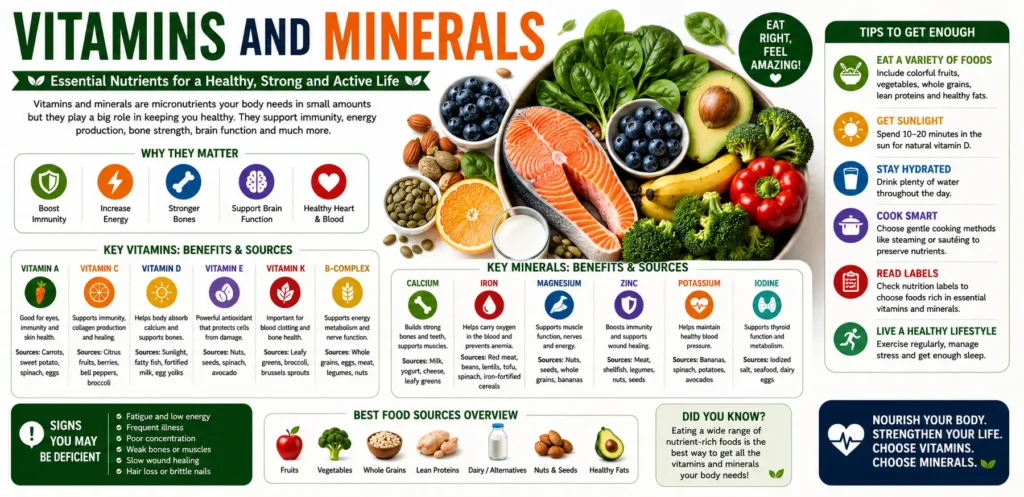
Fruits and vegetables are among the best sources of vitamins and minerals.
Examples include:
- Oranges for vitamin C
- Carrots for vitamin A
- Spinach for iron and magnesium
- Broccoli for vitamin K
- Bananas for potassium
Aim to include a variety of colorful produce each day.
Step 3: Include Whole Grains
Whole grains provide important nutrients that refined grains often lack.
Healthy options include:
- Oats
- Brown rice
- Quinoa
- Whole wheat bread
- Barley
Whole grains contain B vitamins, magnesium, and other beneficial nutrients.
Step 4: Consume Quality Protein Sources
Many protein-rich foods also provide essential vitamins and minerals.
Examples include:
- Fish
- Eggs
- Poultry
- Lean meats
- Beans
- Lentils
These foods contribute nutrients such as iron, zinc, and B vitamins.
Step 5: Include Dairy or Alternatives
Dairy products are known for providing calcium and vitamin D.
Good options include:
- Milk
- Yogurt
- Cheese
For those who avoid dairy, fortified plant-based alternatives may help meet nutrient needs.
Step 6: Choose Healthy Fats
Certain vitamins require fat for proper absorption.
Healthy fat sources include:
- Avocados
- Nuts
- Seeds
- Olive oil
- Fatty fish
Including healthy fats in meals can improve nutrient utilization.
Step 7: Stay Hydrated
Water supports many bodily functions, including nutrient transport.
Proper hydration helps the body use nutrients effectively.
Advanced Fixes
Focus on Nutrient-Dense Foods
Nutrient-dense foods provide high amounts of vitamins and minerals relative to their calorie content.
Examples include:
- Kale
- Spinach
- Berries
- Salmon
- Eggs
- Sweet potatoes
Regularly consuming these foods can improve overall nutrient intake.
Learn About Key Nutrients
Understanding important vitamins and minerals can help improve food choices.
Vitamin C
Supports:
- Immune function
- Collagen production
- Wound healing
Sources:
- Citrus fruits
- Strawberries
- Bell peppers
Vitamin D
Supports:
- Bone health
- Immune function
- Calcium absorption
Sources:
- Fatty fish
- Fortified foods
- Sunlight exposure
Calcium
Supports:
- Strong bones and teeth
- Muscle function
- Nerve signaling
Sources:
- Dairy products
- Fortified beverages
- Leafy greens
Iron
Supports:
- Oxygen transport
- Energy production
Sources:
- Lean meats
- Beans
- Lentils
- Spinach
Magnesium
Supports:
- Muscle function
- Energy metabolism
- Nervous system health
Sources:
- Nuts
- Seeds
- Whole grains
- Leafy greens
Improve Food Preparation Methods
Certain cooking methods help preserve nutrients.
Examples include:
- Steaming vegetables
- Light sautéing
- Roasting at moderate temperatures
Overcooking can reduce the nutrient content of some foods.
Monitor High-Risk Nutrients
Some nutrients are commonly under-consumed, including:
- Vitamin D
- Iron
- Calcium
- Magnesium
Paying extra attention to these nutrients can help prevent deficiencies.
Consider Professional Guidance
If you suspect a nutrient deficiency, consult a healthcare professional.
Testing and personalized recommendations can help identify specific needs.
Tips to Prevent Vitamin and Mineral Deficiencies
Eat a Variety of Foods
Different foods provide different nutrients.
Aim for a colorful and diverse diet throughout the week.
Fill Half Your Plate with Fruits and Vegetables
This simple habit can significantly increase vitamin and mineral intake.
Choose multiple colors whenever possible.
Limit Highly Processed Foods
Processed foods often provide fewer vitamins and minerals compared to whole foods.
Make nutrient-rich foods the foundation of your diet.
Plan Balanced Meals
Include:
- Protein
- Vegetables
- Fruits
- Whole grains
- Healthy fats
Balanced meals help support overall nutrition.
Read Nutrition Labels
Nutrition labels can help identify foods that provide important nutrients.
Pay attention to:
- Vitamin D
- Calcium
- Iron
- Potassium
Maintain Healthy Lifestyle Habits
Regular exercise, adequate sleep, and stress management support overall health and nutritional well-being.
FAQs
What are vitamins and minerals?
Vitamins and minerals are essential nutrients that support growth, energy production, immunity, bone health, and many other bodily functions.
Why are vitamins and minerals important?
They help regulate important processes throughout the body, including metabolism, immune function, muscle activity, and cell repair.
Can I get enough vitamins and minerals from food alone?
Many people can meet their nutrient needs through a balanced diet rich in fruits, vegetables, whole grains, protein sources, and healthy fats.
What are common signs of nutrient deficiencies?
Symptoms vary depending on the nutrient involved but may include fatigue, weakness, poor concentration, weakened immunity, and changes in skin or hair health.
Are supplements necessary?
Supplements may be beneficial for some individuals based on age, dietary restrictions, health conditions, or specific deficiencies. A healthcare professional can provide personalized guidance.
Conclusion
Vitamins and minerals are essential building blocks for good health. Although the body only requires small amounts of these nutrients, they play critical roles in energy production, immunity, bone strength, muscle function, and overall well-being.
The best way to support your nutrient needs is through a balanced diet that includes fruits, vegetables, whole grains, lean proteins, healthy fats, and adequate hydration. By understanding the importance of vitamins and minerals and making informed food choices, you can reduce the risk of deficiencies and support long-term health.
Small dietary improvements made consistently can have a lasting impact. Focus on variety, balance, and nutrient-rich foods to help your body perform at its best every day.
- Vitamins and Minerals Why Your Body Needs Them and How to Get Enough Every Day
- Meal Planning Ideas A Complete Guide to Saving Time Eating Healthier and Reducing Stress
- Nutrition for Fitness A Complete Guide to Fueling Your Body for Better Performance
- Clean Eating Habits A Practical Guide to Healthier Everyday Nutrition
- Superfoods Benefits How Nutrient-Rich Foods Can Improve Your Health
