
Introduction
Many people want to eat healthier, boost their energy levels, and reduce the risk of health problems, but they often struggle to know which foods provide the greatest nutritional value. With countless diet trends and health claims circulating online, it can be difficult to separate facts from marketing.
FOR MORE SOLUTIONS VISIT
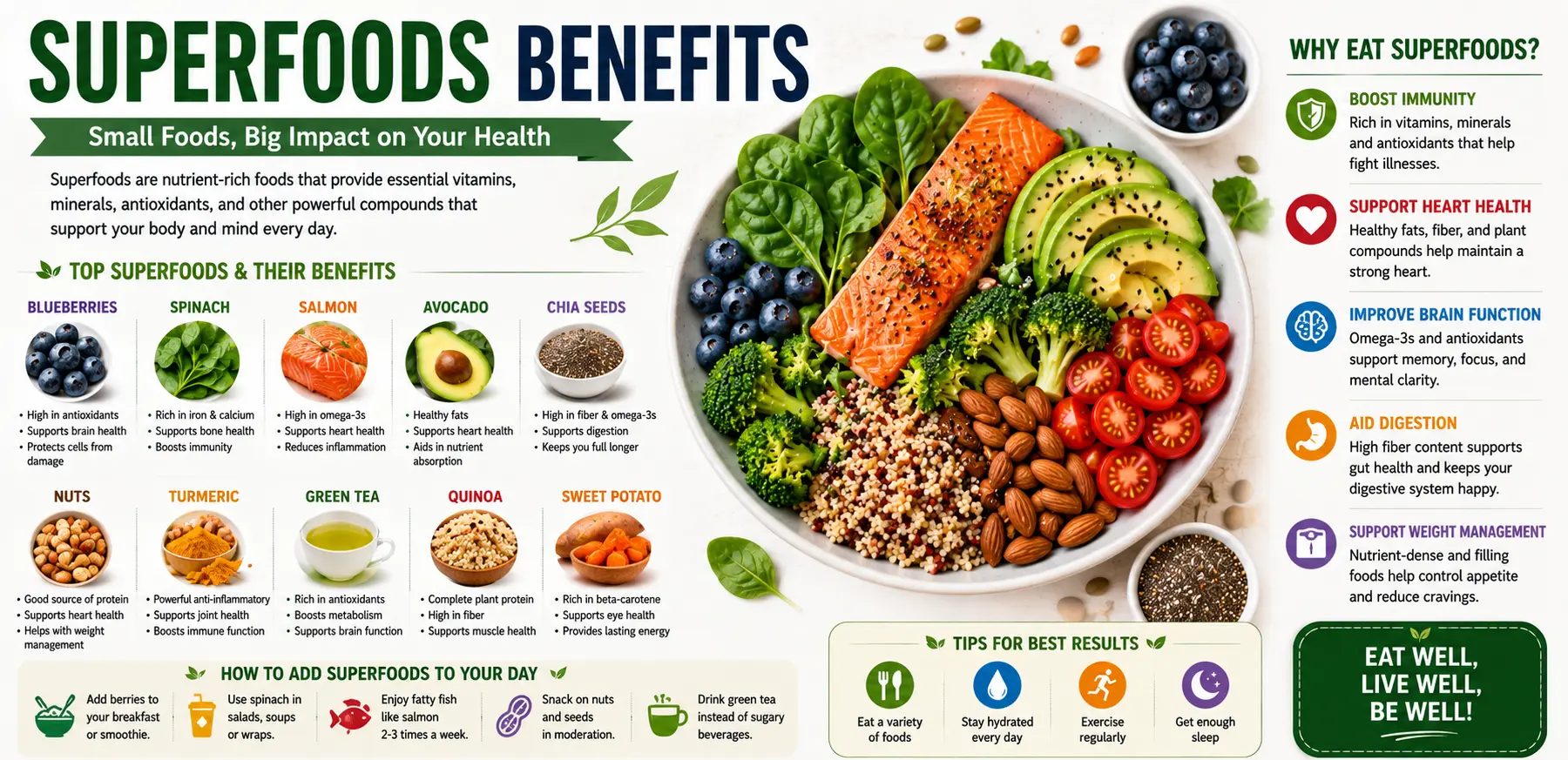
This is where understanding superfoods benefits becomes valuable. Superfoods are nutrient-dense foods that contain high levels of vitamins, minerals, antioxidants, healthy fats, fiber, or other beneficial compounds. While no single food can provide perfect health, including superfoods in a balanced diet can help support overall wellness.
Poor dietary habits can contribute to low energy, weakened immunity, digestive issues, and long-term health concerns. By learning how superfoods work and incorporating them into daily meals, you can improve nutrition without following restrictive diets or complicated meal plans.
This guide explores the benefits of superfoods, common reasons people miss out on these nutritious foods, practical ways to include them in your diet, advanced nutrition strategies, prevention tips, and answers to frequently asked questions.
Main Causes of Poor Nutrient Intake
1. Heavy Reliance on Processed Foods
Many processed foods are convenient but often lack essential nutrients.
Items such as sugary snacks, fast food, and packaged meals may contain high amounts of calories while providing limited vitamins and minerals.
2. Lack of Nutrition Knowledge
Many people are unfamiliar with nutrient-rich foods and their health benefits.
Without understanding which foods offer the greatest nutritional value, it becomes difficult to make informed choices.
3. Busy Schedules
Busy lifestyles often lead to quick food decisions that prioritize convenience over nutrition.
As a result, nutrient-dense foods may be replaced with less healthy alternatives.
4. Limited Variety in the Diet
Eating the same foods repeatedly can reduce the diversity of nutrients consumed.
A varied diet helps ensure the body receives a broad range of vitamins, minerals, and antioxidants.
5. Misleading Health Claims
Some products are marketed as healthy despite containing high levels of sugar, sodium, or unhealthy fats.
This can create confusion and prevent people from selecting truly nutritious foods.
Step-by-Step Solutions
Step 1: Understand What Superfoods Are
The term “superfood” is not a scientific classification. It generally refers to foods that are especially rich in nutrients and health-promoting compounds.
Common superfoods include:
- Blueberries
- Salmon
- Kale
- Spinach
- Chia seeds
- Avocados
- Nuts
- Yogurt
- Green tea
- Sweet potatoes
These foods provide a wide range of nutrients that support overall health.
Step 2: Add Berries to Your Diet
Berries are among the most popular superfoods because they are rich in antioxidants, fiber, and vitamins.
Benefits include:
- Supporting immune health
- Promoting healthy digestion
- Helping protect cells from oxidative stress
Popular options include blueberries, strawberries, raspberries, and blackberries.
Step 3: Eat More Leafy Greens
Leafy greens provide essential nutrients while remaining low in calories.
Examples include:
- Spinach
- Kale
- Swiss chard
- Collard greens
These vegetables contain vitamins A, C, and K, along with important minerals and antioxidants.
Step 4: Include Healthy Fats
Certain superfoods contain beneficial fats that support heart and brain health.
Examples include:
- Avocados
- Walnuts
- Almonds
- Chia seeds
- Flaxseeds
Healthy fats also help the body absorb fat-soluble vitamins.
Step 5: Consume Fatty Fish
Fatty fish such as salmon, sardines, and mackerel are rich in omega-3 fatty acids.
Potential benefits include:
- Supporting heart health
- Promoting brain function
- Reducing inflammation
Aim to include fish regularly if it fits your dietary preferences.
Step 6: Choose Whole Grains
Whole grains provide fiber, vitamins, and minerals.
Healthy choices include:
- Oats
- Quinoa
- Brown rice
- Barley
Fiber supports digestion and may help improve satiety.
Step 7: Stay Consistent
Superfoods work best as part of a balanced eating pattern.
Rather than relying on a single food, focus on regularly consuming a variety of nutrient-rich foods.
Advanced Fixes
Combine Superfoods for Better Nutrition
Pairing superfoods together can increase nutritional variety.
Examples include:
- Greek yogurt with berries
- Oatmeal with chia seeds
- Spinach salad with salmon
- Smoothies containing fruit and leafy greens
Combining foods allows you to benefit from a wider range of nutrients.
Focus on Antioxidant Intake
Many superfoods contain antioxidants that help protect cells from oxidative stress.
Antioxidant-rich foods include:
- Berries
- Green tea
- Dark leafy greens
- Nuts
- Cocoa
A diet rich in antioxidants may support overall health and healthy aging.
Prioritize Fiber-Rich Superfoods
Fiber offers multiple health benefits, including:
- Supporting digestion
- Helping manage appetite
- Supporting heart health
High-fiber superfoods include:
- Chia seeds
- Oats
- Beans
- Lentils
- Berries
Rotate Your Food Choices
Eating a variety of superfoods helps prevent nutritional gaps.
Different foods provide different nutrients, so variety is often more beneficial than focusing heavily on one item.
Consider Cooking Methods
Cooking methods can affect nutrient retention.
Helpful approaches include:
- Steaming vegetables
- Roasting vegetables
- Light sautéing
- Consuming some vegetables raw
Using gentle cooking methods may help preserve nutrients.
Tips to Prevent Nutrient Deficiencies
Build Meals Around Whole Foods
Make fruits, vegetables, whole grains, lean proteins, and healthy fats the foundation of your meals.
This naturally increases nutrient intake.
Keep Superfoods Easily Accessible
Store healthy foods where they are easy to see and use.
Examples include:
- Fruit bowls on countertops
- Pre-cut vegetables in the refrigerator
- Nuts in portion-sized containers
Convenience encourages healthier choices.
Prepare Healthy Snacks
Nutritious snacks can help maintain energy levels throughout the day.
Examples include:
- Mixed nuts
- Yogurt with berries
- Apple slices with nut butter
- Chia pudding
Read Food Labels
Some products marketed as healthy may contain excessive sugar or sodium.
Reading labels helps identify healthier options.
Plan Meals Ahead
Meal planning reduces reliance on processed foods and increases opportunities to include nutrient-rich ingredients.
Even a simple weekly plan can improve dietary quality.
Maintain Balance
Superfoods should complement a healthy diet, not replace it.
Overall eating patterns matter more than any individual food.
FAQs
What are superfoods?
Superfoods are nutrient-dense foods that provide high amounts of vitamins, minerals, antioxidants, fiber, or healthy fats. Examples include berries, leafy greens, fish, nuts, and seeds.
Can superfoods prevent diseases?
No food can guarantee disease prevention. However, many superfoods contain nutrients that support overall health and may help reduce certain risk factors when included in a balanced diet.
How often should I eat superfoods?
There is no specific requirement. Including a variety of nutrient-rich foods regularly throughout the week is generally a practical approach.
Are superfoods expensive?
Not necessarily. Many affordable foods qualify as superfoods, including oats, beans, lentils, sweet potatoes, cabbage, spinach, and frozen berries.
Can I lose weight by eating superfoods?
Superfoods alone do not cause weight loss. However, many nutrient-dense foods are filling and can support a healthy eating plan when combined with proper calorie management and physical activity.
Conclusion
Understanding superfoods benefits can help you make smarter food choices and improve your overall nutrition. Foods such as berries, leafy greens, fatty fish, nuts, seeds, and whole grains provide valuable nutrients that support energy, immunity, heart health, digestion, and general well-being.
The key is not to rely on a single “miracle” food but to build a balanced diet that includes a variety of nutrient-rich options. By consistently incorporating superfoods into your meals and snacks, you can create sustainable eating habits that support long-term health and help you feel your best every day.
- Vitamins and Minerals Why Your Body Needs Them and How to Get Enough Every Day
- Meal Planning Ideas A Complete Guide to Saving Time Eating Healthier and Reducing Stress
- Nutrition for Fitness A Complete Guide to Fueling Your Body for Better Performance
- Clean Eating Habits A Practical Guide to Healthier Everyday Nutrition
- Superfoods Benefits How Nutrient-Rich Foods Can Improve Your Health
