
Introduction
Healthy eating is one of the most important factors for maintaining good health, yet many people find it difficult to follow a nutritious diet consistently. Busy schedules, processed foods, misleading diet trends, and unhealthy habits often make it challenging to make good food choices every day.
FOR MORE SOLUTIONS VISIT
Poor eating habits can affect more than just body weight. They can lead to low energy, poor concentration, digestive issues, weakened immunity, and an increased risk of long-term health problems. Many people know they should eat healthier, but they are unsure where to begin or how to create habits that last.
The good news is that healthy eating doesn’t require extreme diets or complicated meal plans. By understanding the common causes of unhealthy eating and applying practical strategies, anyone can improve their nutrition and overall well-being. This guide explains how to build sustainable healthy eating habits that fit into everyday life.
Main Causes of Unhealthy Eating Habits
1. Lack of Meal Planning
Many people make food choices based on convenience rather than nutrition. When meals are not planned in advance, fast food, takeout, and unhealthy snacks often become the easiest option.
Without preparation, it can be difficult to maintain a balanced diet throughout the week.
2. Busy and Stressful Lifestyles
Work deadlines, family responsibilities, and daily stress can influence eating behaviors. People often skip meals or rely on processed foods when they are short on time.
Stress can also trigger cravings for foods high in sugar, salt, and unhealthy fats.
3. Easy Access to Processed Foods
Processed foods are widely available and heavily marketed. These products are often designed to be highly appealing and convenient.
While they can save time, many processed foods contain excessive amounts of sugar, sodium, and unhealthy fats while providing limited nutritional value.
4. Nutrition Misinformation
The internet is full of conflicting nutrition advice. Some diets encourage eliminating entire food groups, while others promote unrealistic expectations.
This confusion can make healthy eating seem complicated and discourage people from making simple improvements.
5. Emotional Eating
Many individuals eat in response to emotions rather than hunger. Feelings such as stress, boredom, sadness, or frustration can lead to overeating or unhealthy food choices.
Over time, emotional eating can become a difficult habit to break.
Step-by-Step Solutions
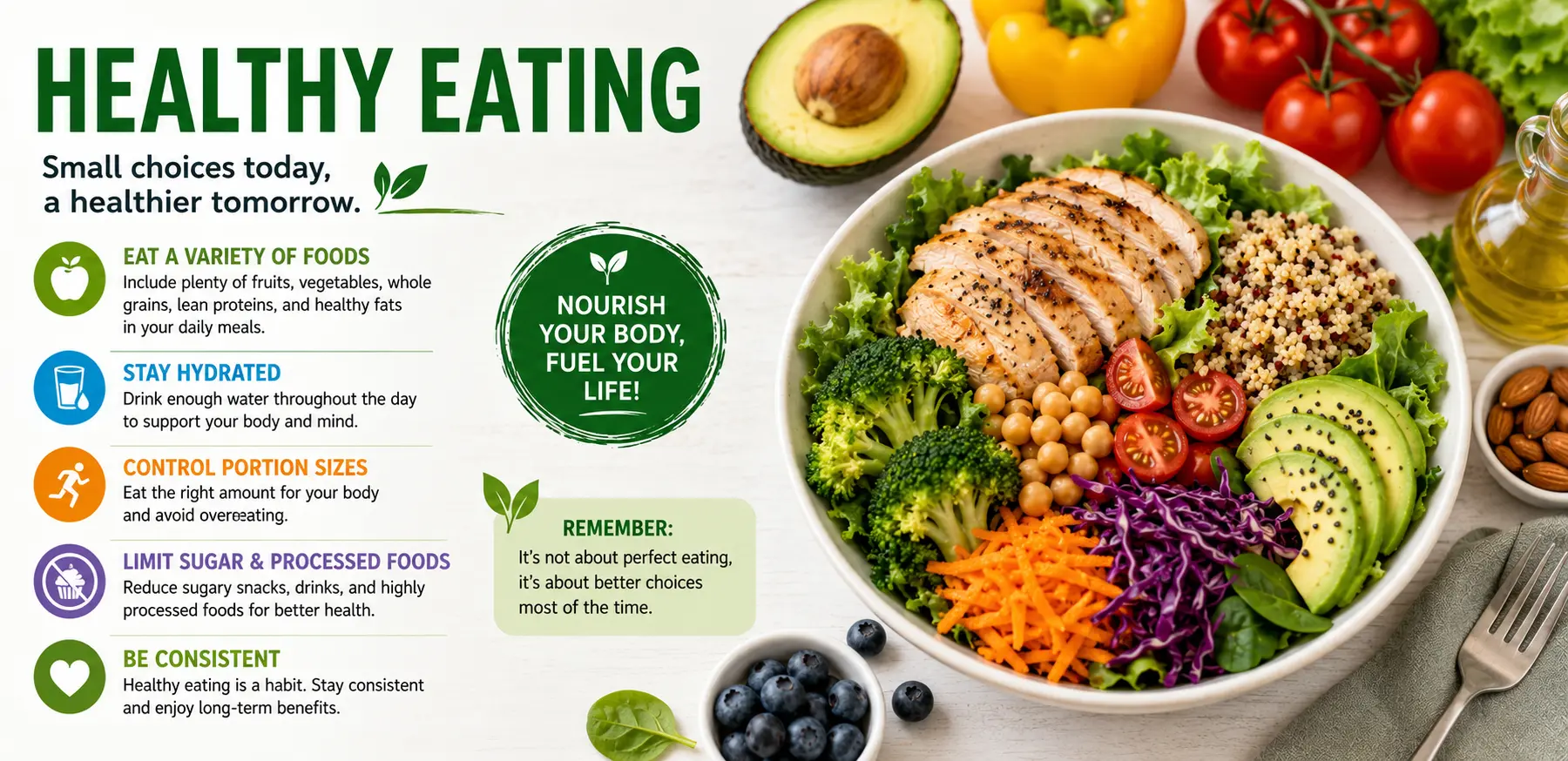
Step 1: Focus on Whole Foods
One of the simplest ways to improve healthy eating is to choose foods that are as close to their natural form as possible.
Examples include:
- Fresh fruits
- Vegetables
- Whole grains
- Lean proteins
- Nuts and seeds
- Beans and legumes
Whole foods provide essential nutrients that support overall health and help reduce dependence on highly processed products.
Step 2: Build Balanced Meals
A balanced meal contains a combination of nutrients that your body needs for energy and proper function.
A simple method is:
- Half of your plate should contain vegetables and fruits.
- One-quarter should contain lean protein.
- One-quarter should contain whole grains or healthy carbohydrates.
Examples include grilled chicken with vegetables and brown rice, or salmon with sweet potatoes and a side salad.
Step 3: Eat More Fruits and Vegetables
Fruits and vegetables are rich in vitamins, minerals, antioxidants, and fiber.
Simple ways to increase intake include:
- Adding fruit to breakfast
- Including vegetables with lunch and dinner
- Choosing fruit as a snack
- Adding vegetables to soups, sandwiches, and pasta dishes
Small additions throughout the day can significantly improve nutrition.
Step 4: Stay Hydrated
Water plays a vital role in digestion, circulation, temperature regulation, and overall health.
Many people mistake thirst for hunger, which can lead to unnecessary snacking.
Helpful hydration habits include:
- Carrying a reusable water bottle
- Drinking water before meals
- Replacing sugary drinks with water more often
Step 5: Reduce Added Sugar
Excess sugar consumption can contribute to weight gain and other health concerns.
Common sources of added sugar include:
- Soft drinks
- Candy
- Sweetened coffee beverages
- Pastries
- Packaged snacks
Reading food labels can help identify products with high sugar content.
Step 6: Include Protein in Every Meal
Protein helps support muscle maintenance and keeps you feeling full longer.
Good protein sources include:
- Chicken
- Fish
- Eggs
- Greek yogurt
- Tofu
- Beans
- Lentils
Adding protein to meals may help reduce cravings and support better appetite control.
Step 7: Practice Mindful Eating
Mindful eating involves paying attention to your food and eating experience.
Try these habits:
- Eat slowly
- Avoid screens during meals
- Notice hunger and fullness signals
- Enjoy flavors and textures
Mindful eating can improve satisfaction and reduce overeating.
Advanced Fixes
Learn How to Read Nutrition Labels
Nutrition labels provide valuable information about food products.
Pay attention to:
- Serving size
- Calories
- Protein
- Fiber
- Added sugars
- Sodium
Understanding labels allows you to make more informed decisions when shopping.
Increase Fiber Intake
Fiber is essential for digestive health and can help manage appetite.
High-fiber foods include:
- Oats
- Whole grains
- Beans
- Lentils
- Fruits
- Vegetables
Gradually increasing fiber intake while drinking enough water can support healthy digestion.
Improve Meal Timing
Although overall food quality matters most, meal timing can also influence energy levels.
Helpful strategies include:
- Eating breakfast if it suits your lifestyle
- Avoiding long periods without food
- Having balanced meals throughout the day
Consistent eating patterns may help reduce overeating later.
Prepare Meals in Advance
Meal preparation can make healthy eating easier during busy weeks.
Consider:
- Cooking larger portions
- Preparing ingredients ahead of time
- Portioning meals into containers
This reduces the temptation to choose less nutritious convenience foods.
Prioritize Nutrient-Dense Foods
Nutrient-dense foods provide significant nutrition without excessive calories.
Examples include:
- Leafy greens
- Berries
- Fish
- Eggs
- Nuts
- Seeds
Regularly including these foods can improve overall diet quality.
Tips to Prevent Unhealthy Eating Habits
Keep Healthy Foods Visible
Foods that are easy to see are often the foods people eat most frequently.
Place fruits, vegetables, and healthy snacks in accessible locations at home and work.
Create a Weekly Meal Plan
A simple meal plan can reduce last-minute food decisions and improve consistency.
Even planning three to five meals in advance can make a significant difference.
Avoid Shopping While Hungry
Shopping on an empty stomach often leads to impulse purchases.
Eat a balanced meal or snack before grocery shopping to make healthier choices.
Get Enough Sleep
Sleep affects appetite-regulating hormones and food cravings.
Most adults should aim for seven to nine hours of quality sleep each night.
Limit Highly Processed Foods
You do not need to eliminate processed foods completely.
Instead, focus on making whole foods the foundation of your diet while enjoying processed foods in moderation.
Be Consistent, Not Perfect
Healthy eating is a long-term habit rather than a short-term challenge.
Occasional treats are part of a balanced lifestyle. Focus on making nutritious choices most of the time rather than striving for perfection.
FAQs
What is healthy eating?
Healthy eating means consuming a balanced variety of foods that provide the nutrients your body needs. This includes fruits, vegetables, whole grains, lean proteins, healthy fats, and adequate hydration.
How can beginners start healthy eating?
Start with simple changes such as drinking more water, eating more fruits and vegetables, reducing sugary drinks, and choosing whole foods whenever possible.
Is healthy eating expensive?
Healthy eating can fit many budgets. Foods such as beans, lentils, oats, eggs, frozen vegetables, and seasonal fruits are often affordable and nutritious.
How many meals should I eat per day?
There is no single perfect number. Some people prefer three meals daily, while others include healthy snacks. The best approach is the one that supports your energy needs and lifestyle.
Can I still enjoy my favorite foods?
Yes. Healthy eating does not require eliminating favorite foods. Moderation and balance are key. Enjoy treats occasionally while maintaining nutritious eating habits most of the time.
Conclusion
Healthy eating is not about following strict diets or avoiding every indulgence. It is about making consistent food choices that nourish your body and support long-term health. By focusing on whole foods, balanced meals, proper hydration, and mindful eating, you can create sustainable habits that fit your lifestyle.
Small improvements made every day often produce better results than drastic changes that are difficult to maintain. Start with one or two healthy habits, build on your progress, and remember that long-term consistency is the foundation of lasting success. Healthy eating is a journey, and every positive choice brings you closer to better health and well-being.
- Vitamins and Minerals Why Your Body Needs Them and How to Get Enough Every Day
- Meal Planning Ideas A Complete Guide to Saving Time Eating Healthier and Reducing Stress
- Nutrition for Fitness A Complete Guide to Fueling Your Body for Better Performance
- Clean Eating Habits A Practical Guide to Healthier Everyday Nutrition
- Superfoods Benefits How Nutrient-Rich Foods Can Improve Your Health
