
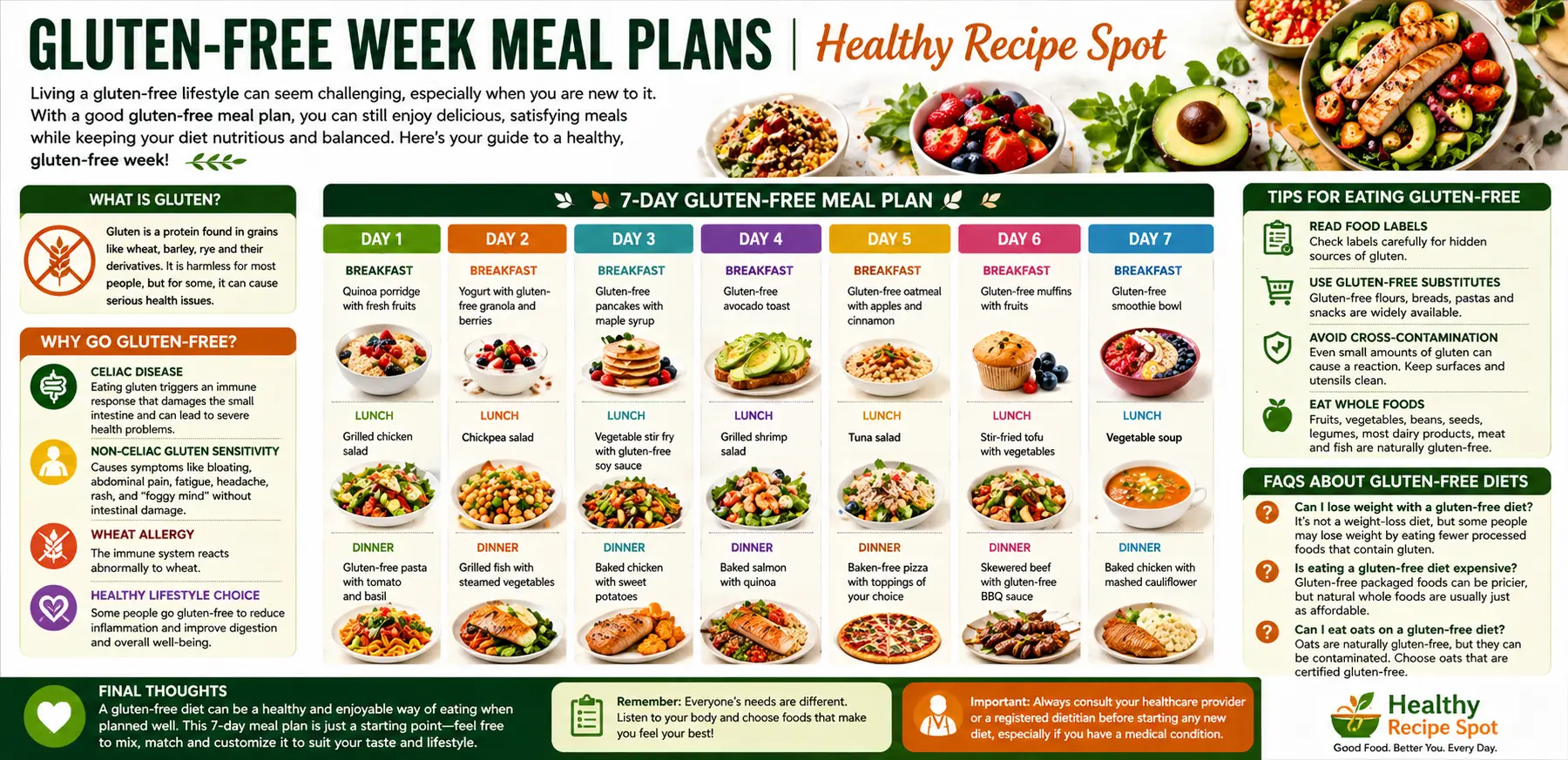
Adopting a gluten-free lifestyle may feel overwhelming at first, especially if you’re used to foods made with wheat, barley, or rye. Letting go of familiar meals can be tough, but it doesn’t mean sacrificing taste or nutrition. With a well-planned approach, you can still enjoy a wide variety of satisfying dishes. This guide offers a simple week-long plan, helpful advice, and meal ideas to make gluten-free living easier.
For More Articles
What is Gluten?
Gluten is a type of protein naturally present in grains such as wheat, barley, and rye. While many people tolerate it without issues, others may experience adverse reactions. Conditions like celiac disease, gluten sensitivity, or wheat allergy can make avoiding gluten necessary for maintaining good health.
Why Choose a Gluten-Free Diet?
There are several reasons people decide to eliminate gluten from their diet:
Celiac Disease
This is an autoimmune condition where consuming gluten damages the lining of the small intestine, leading to serious health complications.
Non-Celiac Gluten Sensitivity
Individuals with this condition may experience symptoms like bloating, stomach pain, fatigue, headaches, or skin issues after consuming gluten, even without intestinal damage.
Wheat Allergy
A wheat allergy occurs when the immune system reacts negatively to proteins found in wheat.
General Health Choice
Some people choose gluten-free eating as a lifestyle preference, believing it may help reduce inflammation and improve digestion.
Gluten-Free Weekly Meal Plan
Following a gluten-free routine doesn’t mean giving up your favorite foods—it’s about swapping ingredients with gluten-free alternatives. Here’s a simple 7-day plan:
Day 1
Breakfast: Quinoa porridge with fresh fruit
Lunch: Grilled chicken salad
Dinner: Gluten-free pasta with tomato and basil
Day 2
Breakfast: Yogurt with gluten-free granola and berries
Lunch: Chickpea salad
Dinner: Grilled fish with steamed vegetables
Day 3
Breakfast: Gluten-free pancakes with maple syrup
Lunch: Vegetable stir-fry with gluten-free soy sauce
Dinner: Baked chicken with sweet potatoes
Day 4
Breakfast: Gluten-free avocado toast
Lunch: Grilled shrimp salad
Dinner: Baked salmon with quinoa
Day 5
Breakfast: Gluten-free oatmeal with apples and cinnamon
Lunch: Tuna salad
Dinner: Gluten-free pizza with your preferred toppings
Day 6
Breakfast: Gluten-free muffins with fruit
Lunch: Stir-fried tofu with vegetables
Dinner: Grilled beef skewers with gluten-free BBQ sauce
Day 7
Breakfast: Smoothie bowl made with gluten-free ingredients
Lunch: Vegetable soup
Dinner: Baked chicken with mashed cauliflower
With a bit of creativity and the right substitutes, gluten-free meals can be just as enjoyable and varied.
Tips for a Gluten-Free Lifestyle
- Always check labels to spot hidden sources of gluten
- Use gluten-free versions of flour, bread, and pasta
- Prevent cross-contamination by cleaning surfaces and utensils thoroughly
- Focus on naturally gluten-free foods like fruits, vegetables, legumes, and most dairy products
Frequently Asked Questions
Can a gluten-free diet help with weight loss?
It’s not specifically designed for weight loss, but some people may lose weight by cutting out processed and high-calorie gluten-containing foods.
Is gluten-free eating expensive?
Specialty gluten-free products can cost more, but whole foods like produce, meat, and fish remain budget-friendly options.
Are oats allowed on a gluten-free diet?
Oats themselves don’t contain gluten, but they can be contaminated during processing. Always choose oats labeled as gluten-free.
Final Thoughts
Switching to a gluten-free diet can be beneficial for many people, whether for medical reasons or personal choice. This 7-day plan is a helpful starting point, but it’s important to tailor your meals to your preferences and needs.
Before making major dietary changes, consider consulting a healthcare professional or dietitian to ensure your plan supports your overall health and nutritional requirements.
- Vitamins and Minerals Why Your Body Needs Them and How to Get Enough Every Day
- Meal Planning Ideas A Complete Guide to Saving Time Eating Healthier and Reducing Stress
- Nutrition for Fitness A Complete Guide to Fueling Your Body for Better Performance
- Clean Eating Habits A Practical Guide to Healthier Everyday Nutrition
- Superfoods Benefits How Nutrient-Rich Foods Can Improve Your Health
