
For more articles
Inflammation plays an essential role in protecting the body by helping it fight infections and heal injuries. However, when inflammation becomes long-term, it can contribute to serious conditions such as heart disease, arthritis, type 2 diabetes, obesity, asthma, and even cancer. The good news is that your diet can influence inflammation—either increasing it or helping to reduce it. Including anti-inflammatory foods in your meals is a smart way to support overall health and wellness.
Research shows that certain foods are especially effective in lowering inflammation. These include a wide variety of fruits and vegetables, foods rich in omega-3 fatty acids, as well as herbs and spices known for their healing properties. Below, you’ll find an overview of these foods along with simple recipes to help you build a healthier diet.
What Are Anti-Inflammatory Foods?
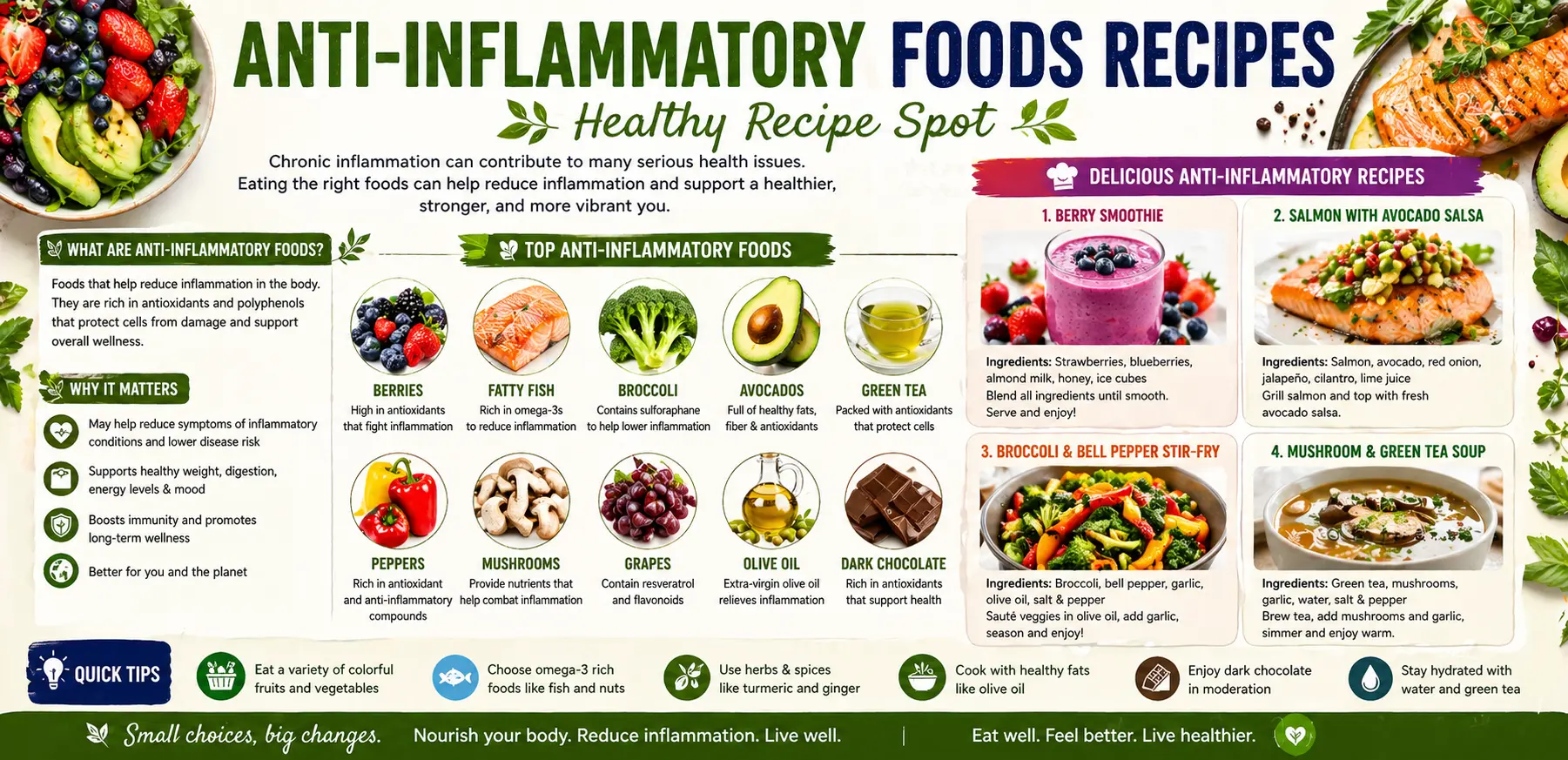
Anti-inflammatory foods are those that help reduce inflammation in the body. They are typically high in antioxidants and polyphenols—compounds that protect cells from damage and help combat inflammatory processes.
An anti-inflammatory eating pattern usually includes:
- Plenty of fruits and vegetables
- Whole grains
- Lean protein sources such as fish, poultry, and plant-based proteins
- Healthy fats like olive oil, nuts, and avocados
- Spices such as turmeric and ginger
Why Follow an Anti-Inflammatory Diet?
Eating this way may help reduce symptoms linked to conditions like rheumatoid arthritis, lupus, and inflammatory bowel disease. Some research also suggests it could lower the risk of certain cancers.
Beyond that, this type of diet supports weight control, improves digestion, boosts energy, enhances mood, and may even contribute to a longer, healthier life.
Top Anti-Inflammatory Foods to Include
- Berries: Strawberries, blueberries, raspberries, and blackberries are rich in antioxidants like anthocyanins.
- Fatty Fish: Salmon, sardines, and mackerel provide omega-3 fatty acids that help reduce inflammation.
- Broccoli: Contains sulforaphane, which helps lower inflammation-related compounds.
- Avocados: Packed with healthy fats, fiber, and antioxidants.
- Green Tea: High in antioxidants that protect cells and reduce inflammation.
- Peppers: Both sweet and spicy varieties contain beneficial compounds.
- Mushrooms: Types like shiitake and portobello offer anti-inflammatory nutrients.
- Grapes: Rich in resveratrol and flavonoids.
- Extra-Virgin Olive Oil: A powerful source of anti-inflammatory antioxidants.
- Dark Chocolate: Contains antioxidants that may help reduce inflammation when consumed in moderation.
Easy Recipes with Anti-Inflammatory Foods
1. Berry Smoothie
A refreshing drink packed with antioxidant-rich berries.
Ingredients:
- ½ cup strawberries
- ½ cup blueberries
- 1 cup almond milk
- 1 tablespoon honey
- Ice cubes
Instructions:
Blend all ingredients until smooth and serve immediately.
2. Salmon with Avocado Salsa
A flavorful dish combining omega-3-rich fish with healthy fats.
Ingredients:
- 4 salmon fillets
- 1 avocado, diced
- ½ red onion, chopped
- 1 jalapeño, minced
- Fresh cilantro
- Juice of 2 limes
Instructions:
Grill the salmon to your liking. Mix the salsa ingredients in a bowl, then spoon over the cooked salmon.
3. Broccoli and Bell Pepper Stir-Fry
A quick vegetable dish full of nutrients.
Ingredients:
- 2 tablespoons olive oil
- 1 bell pepper, sliced
- 2 cups broccoli florets
- 2 garlic cloves, minced
- Salt and pepper
Instructions:
Heat oil in a pan, add vegetables, and cook until tender. Stir in garlic, salt, and pepper, and cook briefly before serving.
4. Mushroom and Green Tea Soup
A soothing soup with powerful anti-inflammatory benefits.
Ingredients:
- 4 cups water
- 2 green tea bags
- 2 cups shiitake mushrooms
- 2 garlic cloves, minced
- Salt and pepper
Instructions:
Boil water, steep tea bags for 5 minutes, then remove. Add mushrooms and garlic, simmer for about 20 minutes, and season to taste.
Final Thoughts
Choosing foods that help reduce inflammation is a practical way to improve your health while enjoying a variety of flavors. By incorporating these ingredients and recipes into your routine, you can take meaningful steps toward a healthier and more balanced lifestyle.
- Vitamins and Minerals Why Your Body Needs Them and How to Get Enough Every Day
- Meal Planning Ideas A Complete Guide to Saving Time Eating Healthier and Reducing Stress
- Nutrition for Fitness A Complete Guide to Fueling Your Body for Better Performance
- Clean Eating Habits A Practical Guide to Healthier Everyday Nutrition
- Superfoods Benefits How Nutrient-Rich Foods Can Improve Your Health
