
Protein is one of the most essential nutrients your body needs to function properly. It supports the growth and repair of tissues, helps produce enzymes and hormones, and plays a key role in maintaining muscles, bones, skin, and blood. If your goal is to build muscle or simply improve your diet, following a High Protein Meal Plan can be a smart and effective approach.
For More Articles
What Is a High-Protein Diet?
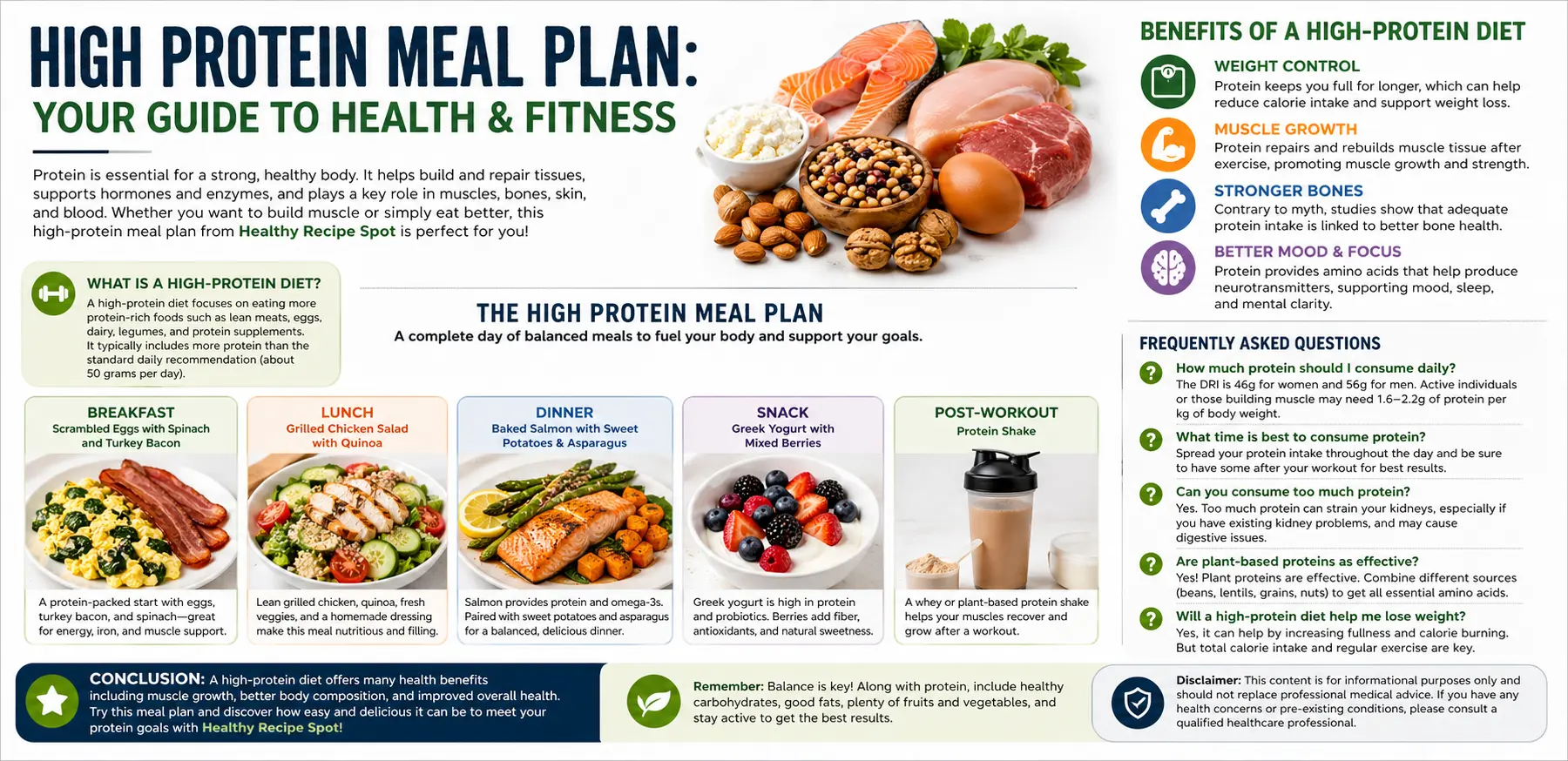
A high-protein diet focuses on increasing your intake of protein-rich foods such as lean meats, dairy products, eggs, legumes, and protein supplements. Typically, this type of diet includes protein amounts higher than the standard daily recommendation, which is around 50 grams for most adults.
Benefits of a High-Protein Diet
Weight Control
Protein helps you feel satisfied for longer periods, which can reduce overeating and support weight management.
Muscle Development
For those who exercise regularly, especially with strength training, protein is essential for repairing and building muscle fibers, leading to improved muscle growth.
Stronger Bones
Research suggests that consuming adequate protein can contribute to better bone density and overall bone health when included as part of a balanced diet.
Enhanced Mood and Focus
Protein contains amino acids that assist in producing neurotransmitters, which influence mood, sleep, and cognitive performance.
Sample High Protein Meal Plan
A well-structured High Protein Meal Plan includes balanced meals throughout the day to maintain consistent protein intake.
Breakfast
Scrambled Eggs with Spinach and Turkey Bacon
A nutritious combination that provides protein, iron, and essential vitamins to start your day.
Lunch
Grilled Chicken Salad with Quinoa
This meal delivers lean protein from chicken along with fiber and nutrients from quinoa and fresh vegetables.
Dinner
Baked Salmon with Sweet Potatoes and Asparagus
A wholesome dish rich in protein, healthy fats, and important vitamins.
Snack
Greek Yogurt with Mixed Berries
A protein-rich snack that also offers probiotics, antioxidants, and natural sweetness.
Post-Workout
Protein Shake
A fast-digesting protein source, such as whey or plant-based options, helps support muscle recovery after exercise.
Frequently Asked Questions
How much protein do you need daily?
Protein requirements vary depending on factors like age, activity level, and body weight. Active individuals may benefit from consuming around 1.6 to 2.2 grams of protein per kilogram of body weight.
When should you eat protein?
It’s best to distribute protein intake evenly across meals, with particular emphasis on post-workout consumption.
Is too much protein harmful?
Excessive protein intake may put strain on the kidneys, especially for individuals with existing health issues, and could also cause digestive discomfort.
Are plant-based proteins effective?
Yes, plant-based proteins can meet your needs when you combine different sources to ensure a complete amino acid profile.
Can a high-protein diet help with weight loss?
Yes, it can support weight loss by reducing hunger and increasing metabolism, but overall calorie intake and activity levels still play a major role.
Conclusion
Following a High Protein Meal Plan can support muscle growth, aid in weight management, and improve overall health. The key is to maintain balance by including other nutrients like healthy fats, carbohydrates, and plenty of fruits and vegetables.
Disclaimer: This information is intended for general guidance only and should not replace professional medical advice. If you have any health concerns or existing conditions, consult a qualified healthcare provider.
- Vitamins and Minerals Why Your Body Needs Them and How to Get Enough Every Day
- Meal Planning Ideas A Complete Guide to Saving Time Eating Healthier and Reducing Stress
- Nutrition for Fitness A Complete Guide to Fueling Your Body for Better Performance
- Clean Eating Habits A Practical Guide to Healthier Everyday Nutrition
- Superfoods Benefits How Nutrient-Rich Foods Can Improve Your Health
