
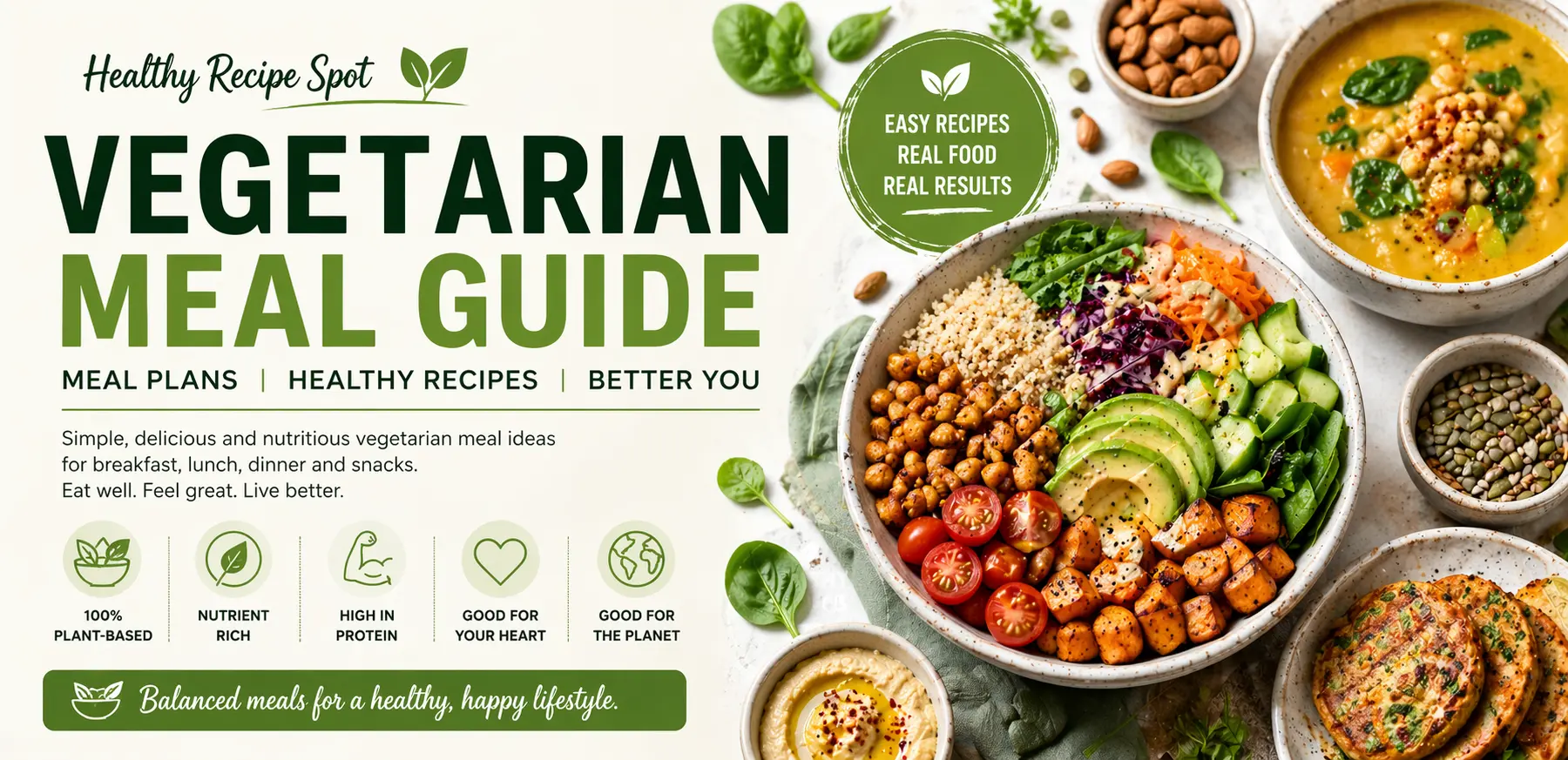
Choosing a vegetarian lifestyle can feel a bit overwhelming at first, especially if you’re unsure where to begin. Whether your goal is better health, environmental awareness, or ethical living, this guide is here to make things simple. You’ll find easy explanations, helpful tips, and tasty plant-based meal ideas for breakfast, lunch, dinner, and snacks.
For more articles
If you’re new to vegetarian eating, you might be wondering a few things:
- What exactly does a vegetarian diet include?
- Can it meet all your nutritional needs?
- Are there different types of vegetarian diets?
- How do you create balanced meals?
Let’s break it down.
What Does a Vegetarian Diet Include?
A vegetarian diet focuses on plant-based foods like fruits, vegetables, grains, legumes, nuts, and seeds. It excludes meat, poultry, and seafood. Many vegetarians also avoid ingredients that come from animal processing, such as gelatin or rennet.
Is It Nutritionally Balanced?
Yes, a vegetarian diet can absolutely provide all the nutrients your body needs when planned properly. It’s typically high in fiber, vitamins, and minerals while being lower in saturated fats. The key is variety—eating a wide range of foods ensures you don’t miss out on important nutrients.
Types of Vegetarian Diets
There isn’t just one way to be vegetarian. Here are some common approaches:
- Lacto-vegetarian: Includes dairy but avoids meat, fish, poultry, and eggs
- Ovo-vegetarian: Includes eggs but avoids meat, fish, poultry, and dairy
- Lacto-ovo vegetarian: Includes both dairy and eggs but no meat or fish
- Vegan: Avoids all animal products, including dairy, eggs, and honey
Building a Balanced Vegetarian Meal Plan
A healthy vegetarian meal plan should include a mix of:
- Fresh fruits and vegetables
- Whole grains
- Plant-based proteins like beans, lentils, tofu, and tempeh
- Healthy fats such as nuts, seeds, and oils
Variety is what keeps your meals both nutritious and enjoyable.
Easy Vegetarian Meal Ideas
You don’t have to sacrifice taste when going vegetarian. Here are some simple and satisfying options:
Breakfast
- Vegetarian breakfast burritos with black beans, avocado, and salsa
- Chickpea flour pancakes topped with avocado and a bit of cheese
Lunch
- Sweet potato and black bean quinoa bowls packed with protein and fiber
- Tempeh sandwiches loaded with flavor and nutrients
Dinner
- Chickpea coconut curry for a warm, comforting meal
- Grilled portobello mushrooms as a hearty, meat-free main dish
Snacks
- Crunchy roasted chickpeas
- Steamed edamame for a quick protein boost
Final Thoughts
A vegetarian diet can be both healthy and enjoyable when you focus on balance and variety. Everyone’s nutritional needs are different, so it’s a good idea to consult a professional if you’re unsure about your diet.
Use this guide as a starting point, experiment with flavors, and adjust meals to suit your preferences. Eating plant-based can be simple, delicious, and rewarding.
- Vitamins and Minerals Why Your Body Needs Them and How to Get Enough Every Day
- Meal Planning Ideas A Complete Guide to Saving Time Eating Healthier and Reducing Stress
- Nutrition for Fitness A Complete Guide to Fueling Your Body for Better Performance
- Clean Eating Habits A Practical Guide to Healthier Everyday Nutrition
- Superfoods Benefits How Nutrient-Rich Foods Can Improve Your Health
