
Introduction
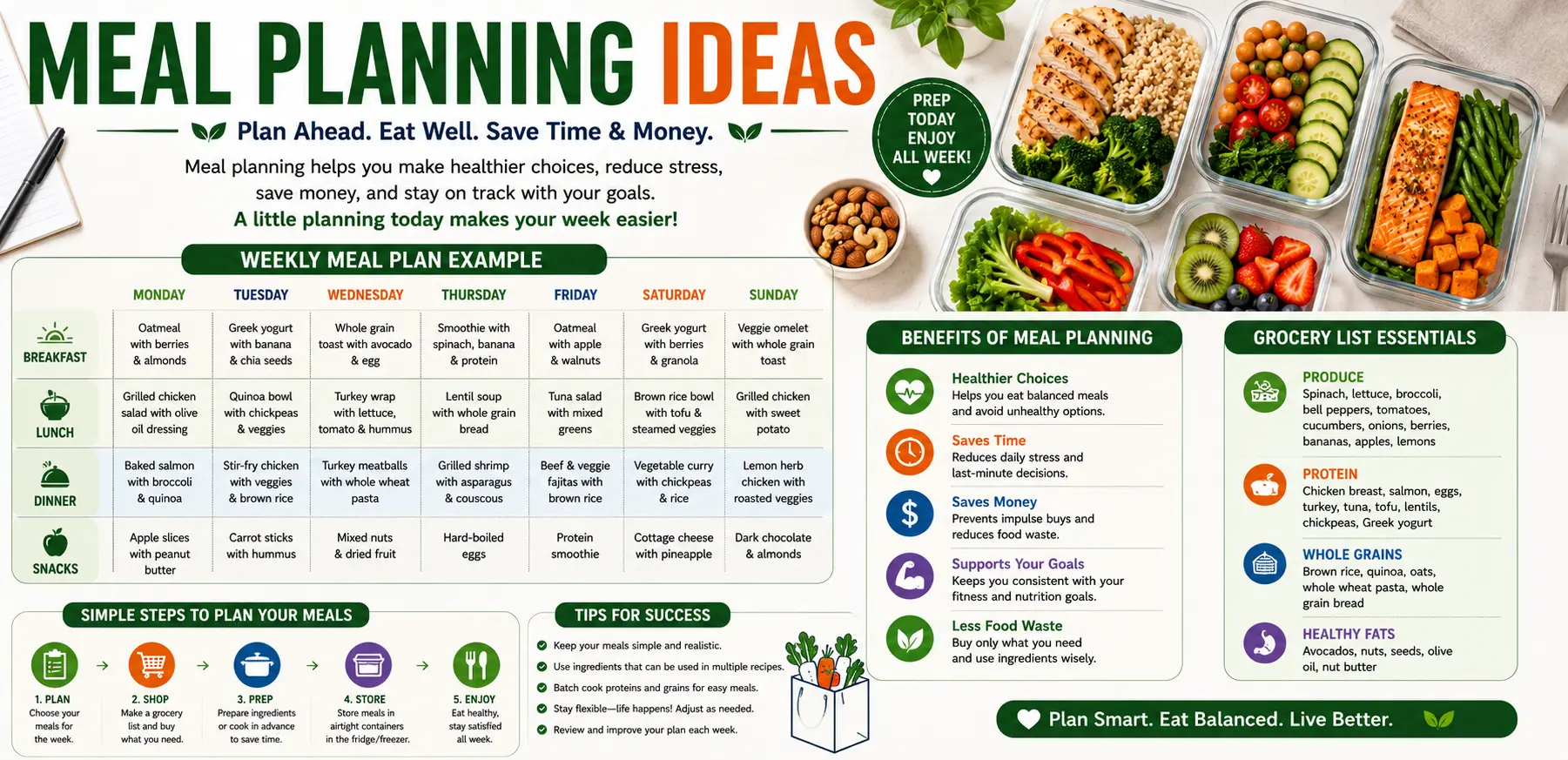
Many people want to eat healthier, save money, and reduce the stress of deciding what to eat every day. However, busy schedules, unexpected commitments, and a lack of preparation often lead to last-minute food choices that may not support health or budget goals
FOR MORE SOLUTIONS VISIT
This is where meal planning ideas can make a significant difference. Meal planning involves organizing your meals in advance so you know what you’ll eat throughout the week. It helps eliminate guesswork, reduces food waste, and makes healthy eating much easier to maintain.
Without a plan, people often rely on fast food, takeout meals, or processed snacks because they are convenient. Over time, these habits can affect nutrition, increase grocery expenses, and create unnecessary stress. Fortunately, meal planning doesn’t need to be complicated. With a few simple strategies, anyone can create an effective meal plan that fits their lifestyle.
This guide explores common meal planning challenges, practical solutions, advanced strategies, prevention tips, and frequently asked questions to help you build a sustainable meal planning routine.
Main Causes of Poor Meal Planning
1. Lack of Time
One of the biggest obstacles to meal planning is a busy schedule.
Work, family responsibilities, and social commitments often leave little time for grocery shopping and meal preparation. As a result, many people make food decisions at the last minute.
2. Not Knowing What to Cook
Some individuals struggle to come up with meal ideas throughout the week.
Without a list of recipes or favorite meals, planning can feel overwhelming and lead to inconsistent eating habits.
3. Impulse Food Purchases
Shopping without a plan often results in buying foods that are not needed.
This can increase grocery costs and lead to food waste when ingredients go unused.
4. Unrealistic Expectations
Many beginners try to prepare every meal for an entire week immediately.
This can feel exhausting and difficult to maintain, causing people to abandon meal planning altogether.
5. Lack of Organization
Without a system for tracking meals, ingredients, and grocery lists, meal planning can become confusing and inefficient.
Simple organization tools can make a major difference.
Step-by-Step Solutions
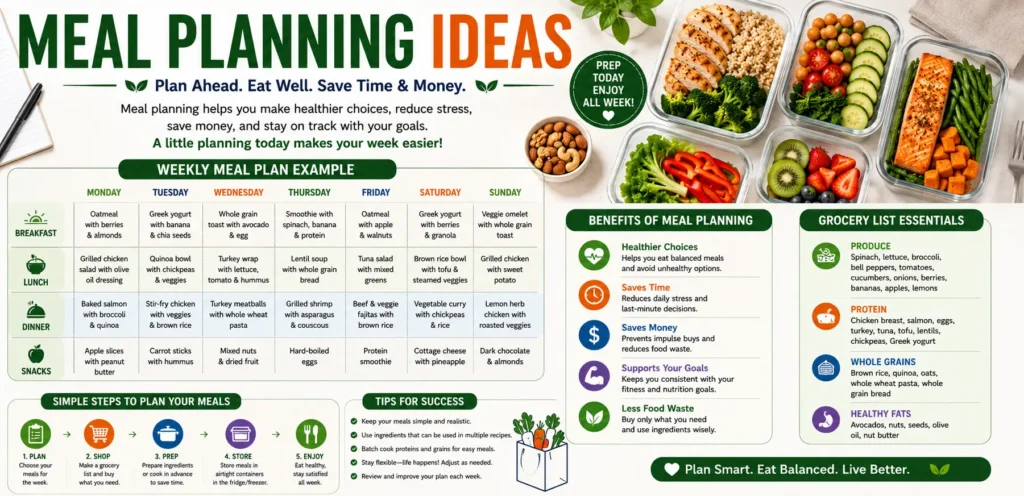
Step 1: Start with a Weekly Meal Plan
Begin by planning meals for the next seven days.
Write down:
- Breakfasts
- Lunches
- Dinners
- Snacks
You don’t need a different recipe every day. Repeating meals can save time and simplify preparation.
Step 2: Build Meals Around Core Ingredients
Choose a few versatile ingredients that can be used in multiple meals.
Examples include:
- Chicken breast
- Eggs
- Brown rice
- Quinoa
- Vegetables
- Beans
- Greek yogurt
Using common ingredients reduces waste and lowers grocery costs.
Step 3: Create a Shopping List
Once meals are planned, create a detailed grocery list.
Organize your list by category:
- Produce
- Protein
- Dairy
- Grains
- Frozen foods
- Pantry items
A structured list helps prevent forgotten items and impulse purchases.
Step 4: Schedule Meal Prep Time
Choose one or two days each week for preparation.
Simple tasks include:
- Washing vegetables
- Cooking proteins
- Preparing grains
- Portioning snacks
Even one hour of preparation can save significant time during the week.
Step 5: Use Simple Recipes
Meal planning doesn’t require complicated cooking.
Begin with easy meals such as:
- Grilled chicken with vegetables
- Oatmeal with fruit
- Rice and bean bowls
- Pasta with vegetables and lean protein
- Salads with protein sources
Simple meals are often easier to maintain long term.
Step 6: Prepare Healthy Snacks
Planning snacks can help reduce unhealthy food choices.
Examples include:
- Fruit
- Nuts
- Yogurt
- Hard-boiled eggs
- Vegetable sticks with hummus
Having healthy snacks available makes it easier to stay on track.
Step 7: Review and Adjust Weekly
At the end of each week, evaluate what worked and what didn’t.
Ask yourself:
- Which meals were easy?
- Which meals took too long?
- Which foods were left unused?
Continuous improvement helps create a more effective system.
Advanced Fixes
Batch Cook Popular Meals
Batch cooking involves preparing larger quantities of food at once.
Examples include:
- Soups
- Chili
- Rice
- Grilled chicken
- Roasted vegetables
These meals can be stored and used throughout the week.
Create a Rotation System
Instead of creating a new plan every week, build a collection of favorite meals.
For example:
- Monday: Chicken and vegetables
- Tuesday: Tacos
- Wednesday: Stir-fry
- Thursday: Pasta
- Friday: Fish and vegetables
This reduces planning fatigue.
Use Freezer-Friendly Meals
Freezing meals provides convenient backup options for busy days.
Good freezer meals include:
- Soups
- Stews
- Casseroles
- Cooked grains
- Protein portions
This reduces reliance on takeout when schedules become hectic.
Track Food Waste
Pay attention to foods that frequently go unused.
Adjust future shopping habits to purchase only what you realistically consume.
Reducing waste saves money and improves efficiency.
Focus on Balanced Nutrition
Effective meal planning should support overall health.
Aim to include:
- Lean protein
- Fruits
- Vegetables
- Whole grains
- Healthy fats
Balanced meals help maintain energy and support nutritional needs.
Tips to Prevent Meal Planning Problems
Keep a List of Favorite Meals
Having a collection of reliable meal ideas makes planning faster and easier.
Include meals that are:
- Quick to prepare
- Affordable
- Family-friendly
- Nutritious
Always Check Your Pantry First
Before shopping, review what you already have.
This prevents duplicate purchases and helps use existing ingredients.
Avoid Overplanning
Many beginners plan too many recipes.
Start with a few simple meals and gradually expand as you gain confidence.
Shop Once Per Week
A dedicated weekly shopping trip improves organization and reduces unnecessary spending.
It also ensures you have the ingredients needed for your meal plan.
Store Food Properly
Proper storage extends freshness and reduces waste.
Helpful practices include:
- Using airtight containers
- Labeling leftovers
- Refrigerating perishables promptly
Stay Flexible
Unexpected events happen.
Allow room in your meal plan for schedule changes, leftovers, or occasional dining out.
Flexibility makes meal planning more sustainable.
FAQs
What is meal planning?
Meal planning is the process of deciding in advance what meals and snacks you will eat over a specific period, usually a week.
How much time does meal planning save?
Many people save several hours each week by reducing daily decision-making, grocery trips, and last-minute cooking.
Is meal planning good for weight management?
Yes. Meal planning can support weight management by encouraging portion control, balanced meals, and reduced reliance on unhealthy convenience foods.
How often should I meal prep?
Most people find that preparing food once or twice per week works well. The ideal schedule depends on your lifestyle and food preferences.
Can meal planning help save money?
Absolutely. Planning meals helps reduce food waste, prevents impulse purchases, and decreases the need for expensive takeout meals.
Conclusion
Using effective meal planning ideas can simplify your life, improve nutrition, reduce stress, and save money. By planning meals ahead of time, creating organized shopping lists, preparing ingredients in advance, and focusing on simple, balanced meals, you can build a system that supports both your health and your schedule.
The key is to start small and remain consistent. You don’t need a perfect meal plan to see results. Even a little preparation can make healthy eating easier and more sustainable. Over time, meal planning can become one of the most valuable habits for maintaining a healthy lifestyle and achieving your nutrition goals.
- Vitamins and Minerals Why Your Body Needs Them and How to Get Enough Every Day
- Meal Planning Ideas A Complete Guide to Saving Time Eating Healthier and Reducing Stress
- Nutrition for Fitness A Complete Guide to Fueling Your Body for Better Performance
- Clean Eating Habits A Practical Guide to Healthier Everyday Nutrition
- Superfoods Benefits How Nutrient-Rich Foods Can Improve Your Health
