
Introduction
Many people spend hours exercising each week but fail to see the results they expect. They may struggle with low energy, slow recovery, poor performance, or difficulty building muscle and losing fat. In many cases, the missing piece is not the workout itself—it’s nutrition.
FOR MORE SOLUTIONS VISIT
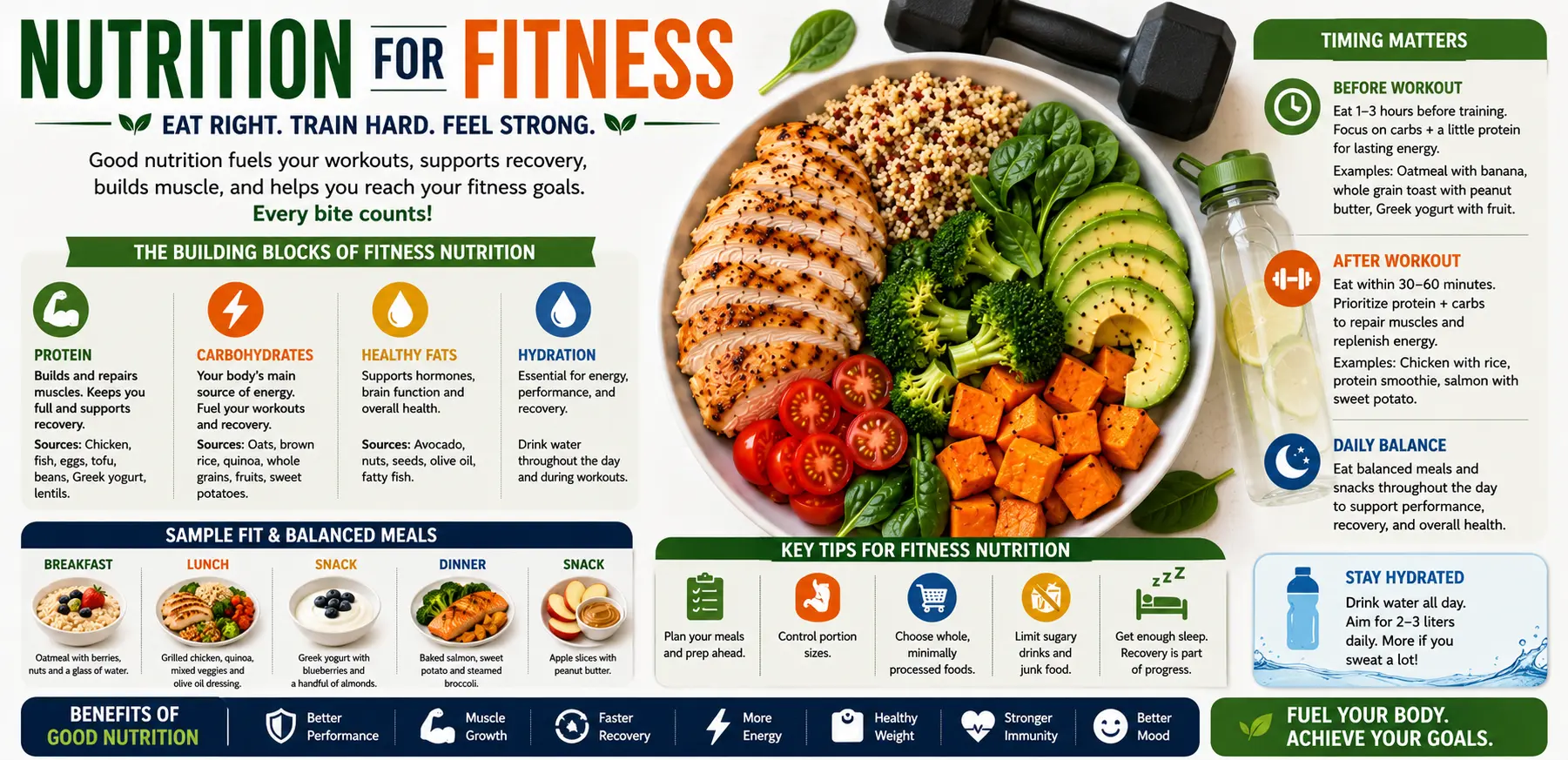
Nutrition for fitness plays a critical role in helping your body perform at its best. Whether your goal is weight loss, muscle gain, improved endurance, or overall health, the foods you eat directly affect your results. Exercise places demands on your body, and proper nutrition provides the fuel and nutrients needed to meet those demands.
Without a balanced approach to nutrition, even the best fitness routine can fall short. Fortunately, you don’t need an extreme diet or expensive supplements to support your fitness goals. By understanding the basics of nutrition and applying a few practical strategies, you can improve your performance, recovery, and long-term health.
Main Causes of Poor Fitness Nutrition
1. Inadequate Protein Intake
Protein is essential for muscle repair and growth. Many people do not consume enough protein throughout the day, especially after workouts.
Insufficient protein intake can slow recovery and make it harder to build or maintain muscle mass.
2. Skipping Meals
Some individuals skip meals because they are busy or trying to reduce calories.
Unfortunately, this can lead to low energy levels, poor workout performance, and increased hunger later in the day.
3. Excessive Processed Foods
Highly processed foods often contain added sugars, unhealthy fats, and empty calories.
While convenient, they may not provide the nutrients needed to support fitness goals effectively.
4. Poor Hydration
Even mild dehydration can negatively affect physical performance.
Lack of adequate water intake may contribute to fatigue, reduced endurance, and slower recovery.
5. Imbalanced Macronutrients
Many people focus heavily on one nutrient while neglecting others.
A balanced intake of carbohydrates, protein, and healthy fats is important for optimal fitness performance and recovery.
Step-by-Step Solutions
Step 1: Prioritize High-Quality Protein
Protein supports muscle repair, recovery, and growth.
Good protein sources include:
- Chicken breast
- Turkey
- Fish
- Eggs
- Greek yogurt
- Cottage cheese
- Tofu
- Lentils
- Beans
Try to include a source of protein with every meal and snack.
Step 2: Eat Complex Carbohydrates
Carbohydrates are the body’s primary source of energy during exercise.
Healthy carbohydrate options include:
- Oats
- Brown rice
- Quinoa
- Sweet potatoes
- Whole wheat bread
- Fruits
- Vegetables
These foods provide sustained energy and support workout performance.
Step 3: Include Healthy Fats
Healthy fats support hormone production, brain function, and nutrient absorption.
Excellent sources include:
- Avocados
- Olive oil
- Almonds
- Walnuts
- Chia seeds
- Flaxseeds
- Fatty fish
Balance is important, as fats are calorie-dense.
Step 4: Stay Properly Hydrated
Hydration is one of the most overlooked aspects of fitness nutrition.
Benefits of proper hydration include:
- Improved endurance
- Better recovery
- Enhanced concentration
- Temperature regulation
Drink water consistently throughout the day, not just during workouts.
Step 5: Eat Before Exercise
A balanced pre-workout meal can improve performance and energy levels.
Good pre-workout options include:
- Oatmeal with fruit
- Whole grain toast with peanut butter
- Greek yogurt with berries
- Banana with nuts
Aim to eat 1–3 hours before exercise when possible.
Step 6: Refuel After Workouts
Post-workout nutrition supports recovery and muscle repair.
A recovery meal should include:
- Protein
- Carbohydrates
- Fluids
Examples include:
- Grilled chicken with rice
- Protein smoothie with fruit
- Greek yogurt and granola
- Salmon with sweet potatoes
Step 7: Focus on Consistency
Fitness nutrition is not about one perfect meal.
Long-term consistency with healthy eating habits produces the best results.
Advanced Fixes
Optimize Protein Distribution
Instead of consuming most of your protein at dinner, spread it throughout the day.
Including protein in breakfast, lunch, dinner, and snacks may improve muscle protein synthesis and recovery.
Increase Nutrient Density
Nutrient-dense foods provide vitamins and minerals that support athletic performance.
Examples include:
- Spinach
- Kale
- Berries
- Broccoli
- Eggs
- Salmon
These foods support overall health while enhancing recovery.
Track Your Recovery Nutrition
Many fitness enthusiasts focus on workouts while ignoring recovery.
Pay attention to:
- Protein intake
- Hydration
- Sleep quality
- Post-workout meals
Recovery is where much of your progress actually occurs.
Consider Meal Timing
While total daily nutrition matters most, meal timing can offer additional benefits.
Helpful strategies include:
- Eating protein after workouts
- Consuming carbohydrates before intense training
- Maintaining regular meal schedules
This can help support energy and recovery.
Monitor Micronutrient Intake
Vitamins and minerals are essential for performance and health.
Important nutrients include:
- Iron
- Calcium
- Magnesium
- Vitamin D
- Potassium
A balanced diet rich in whole foods usually provides many of these nutrients.
Tips to Prevent Nutrition Mistakes
Plan Meals Ahead
Meal preparation helps prevent poor food choices when you’re busy.
Simple preparation can include:
- Cooking proteins in bulk
- Pre-cutting vegetables
- Preparing healthy snacks
Avoid Extreme Diets
Highly restrictive diets often reduce performance and are difficult to sustain.
Focus on balanced eating rather than eliminating entire food groups without medical necessity.
Get Enough Sleep
Sleep and nutrition work together to support fitness.
Poor sleep can increase cravings, reduce recovery, and negatively affect workout performance.
Aim for 7–9 hours of quality sleep each night.
Keep Healthy Snacks Available
Convenient healthy snacks can help maintain energy between meals.
Good options include:
- Fruit
- Nuts
- Greek yogurt
- Protein-rich snacks
- Hard-boiled eggs
Monitor Progress Beyond the Scale
Fitness improvements are not always reflected by body weight alone.
Track:
- Strength gains
- Endurance improvements
- Energy levels
- Recovery quality
- Body measurements
These indicators often provide a more complete picture of progress.
Practice Long-Term Habits
Sustainable nutrition habits typically produce better results than short-term dieting efforts.
Focus on building routines that fit your lifestyle.
FAQs
What is nutrition for fitness?
Nutrition for fitness refers to eating in a way that supports exercise performance, recovery, muscle development, energy levels, and overall health.
How much protein do I need for fitness goals?
Protein needs vary based on body size, activity level, and goals. Active individuals generally benefit from including protein regularly throughout the day.
Are carbohydrates important for fitness?
Yes. Carbohydrates provide energy for workouts and help replenish energy stores after exercise. Choosing complex carbohydrates is often beneficial for sustained performance.
Do I need supplements to improve fitness?
Not necessarily. Many people can meet their nutritional needs through a balanced diet. Supplements may be useful in specific situations but should not replace healthy eating habits.
What should I eat after a workout?
A combination of protein and carbohydrates is often recommended after exercise. Examples include chicken and rice, Greek yogurt with fruit, or a protein smoothie.
Conclusion
Nutrition for fitness is about providing your body with the fuel and nutrients it needs to perform, recover, and adapt to exercise. A balanced approach that includes protein, carbohydrates, healthy fats, hydration, and nutrient-dense foods can help improve workout performance and support long-term health.
The most effective fitness nutrition plan is one that you can follow consistently. Small improvements in food choices, hydration, and meal planning can lead to meaningful results over time. By combining smart nutrition with regular exercise, you can create a strong foundation for achieving your fitness goals and maintaining a healthier lifestyle.
- Vitamins and Minerals Why Your Body Needs Them and How to Get Enough Every Day
- Meal Planning Ideas A Complete Guide to Saving Time Eating Healthier and Reducing Stress
- Nutrition for Fitness A Complete Guide to Fueling Your Body for Better Performance
- Clean Eating Habits A Practical Guide to Healthier Everyday Nutrition
- Superfoods Benefits How Nutrient-Rich Foods Can Improve Your Health
