
Introduction
Many people want to eat healthier, have more energy, and improve their overall well-being, but they often struggle to know what they should eat each day. Busy schedules, confusing nutrition advice, and unhealthy food choices can make it difficult to maintain a balanced diet consistently.
FOR MORE SOLUTIONS VISIT
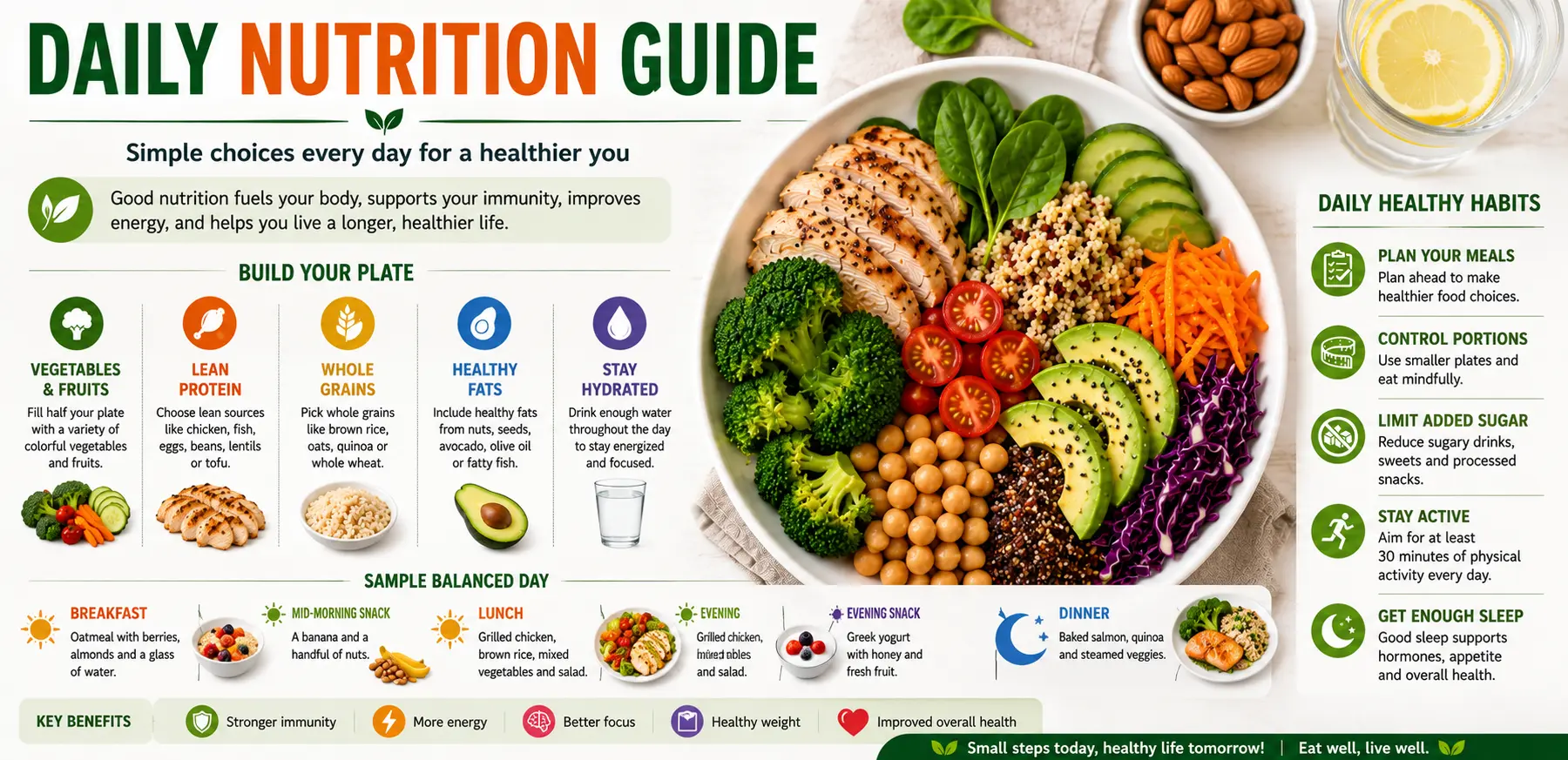
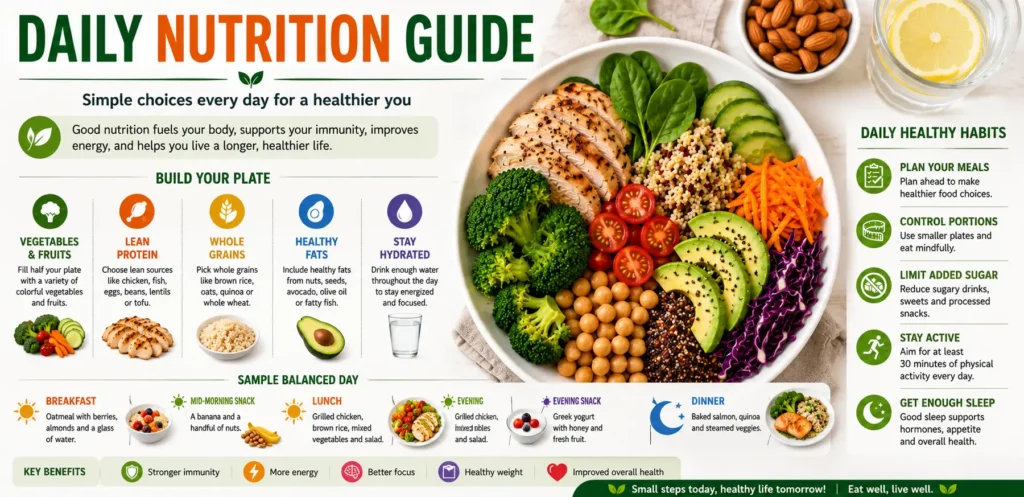
A daily nutrition guide helps simplify healthy eating by providing a practical framework for meeting your body’s nutritional needs every day. Good nutrition supports physical health, mental focus, immune function, and long-term disease prevention. Without proper nutrition, people may experience fatigue, poor concentration, digestive issues, and an increased risk of health problems over time.
The good news is that healthy eating does not have to be complicated. By following a few basic principles and making smart food choices throughout the day, anyone can build sustainable eating habits that support better health.
This daily nutrition guide explains common obstacles to healthy eating, practical solutions, advanced nutrition strategies, prevention tips, and answers to frequently asked questions.
Main Causes of Poor Daily Nutrition
1. Lack of Meal Planning
Many people decide what to eat at the last minute. This often leads to choosing convenient foods that may be high in calories, sugar, and unhealthy fats.
Without a plan, maintaining balanced nutrition becomes much harder.
2. Busy Lifestyles
Work, school, family responsibilities, and social commitments leave many people with limited time for meal preparation.
As a result, fast food, packaged snacks, and processed meals often replace healthier options.
3. Insufficient Nutrition Knowledge
Many individuals are unsure how much protein, fiber, healthy fats, and vegetables they need each day.
This lack of understanding can lead to nutritional imbalances.
4. Excessive Consumption of Processed Foods
Processed foods are often convenient and affordable, but many contain added sugars, sodium, and unhealthy fats.
Regular consumption can reduce the intake of nutrient-rich foods.
5. Skipping Meals
Skipping meals may seem harmless, but it often results in excessive hunger later in the day.
This can lead to overeating and poor food choices.
Step-by-Step Solutions
Step 1: Start Your Day with a Nutritious Breakfast
A balanced breakfast provides energy and helps establish healthy eating habits for the rest of the day.
Good breakfast options include:
- Oatmeal with fruit and nuts
- Greek yogurt with berries
- Eggs with whole-grain toast
- Smoothies made with fruits and protein sources
Aim to include protein and fiber whenever possible.
Step 2: Include Protein in Every Meal
Protein supports muscle maintenance, appetite control, and overall body function.
Healthy protein sources include:
- Chicken
- Fish
- Eggs
- Greek yogurt
- Tofu
- Beans
- Lentils
- Lean meats
Including protein throughout the day can help you feel satisfied longer.
Step 3: Eat Plenty of Fruits and Vegetables
Fruits and vegetables provide essential vitamins, minerals, antioxidants, and fiber.
Try to include a variety of colors because different colors often contain different nutrients.
Examples include:
- Spinach
- Broccoli
- Carrots
- Tomatoes
- Berries
- Apples
- Oranges
Aim to fill half of your plate with fruits and vegetables during meals.
Step 4: Choose Whole Grains
Whole grains provide fiber, vitamins, and sustained energy.
Healthy choices include:
- Brown rice
- Oats
- Whole wheat bread
- Quinoa
- Barley
These options are generally more nutritious than refined grains.
Step 5: Stay Hydrated Throughout the Day
Water is essential for digestion, circulation, and overall health.
Simple hydration habits include:
- Drinking water with meals
- Carrying a reusable water bottle
- Choosing water instead of sugary drinks
Proper hydration can also help reduce unnecessary snacking.
Step 6: Include Healthy Fats
Healthy fats support brain health, hormone production, and nutrient absorption.
Good sources include:
- Avocados
- Olive oil
- Nuts
- Seeds
- Fatty fish
Moderation is important, but healthy fats should be part of a balanced daily nutrition plan.
Step 7: Choose Healthy Snacks
Nutritious snacks can help maintain energy levels between meals.
Examples include:
- Fruit
- Nuts
- Yogurt
- Vegetables with hummus
- Hard-boiled eggs
Healthy snacks help prevent excessive hunger later in the day.
Advanced Fixes
Monitor Your Fiber Intake
Fiber is essential for digestive health and appetite control.
Many people consume less fiber than recommended.
High-fiber foods include:
- Beans
- Lentils
- Oats
- Fruits
- Vegetables
- Whole grains
Gradually increasing fiber intake can support better digestion and satiety.
Read Nutrition Labels Carefully
Food labels provide important information about:
- Calories
- Protein
- Fiber
- Sodium
- Added sugars
Understanding labels can help you make more informed food choices.
Focus on Nutrient Density
Nutrient-dense foods provide a large amount of nutrition relative to their calorie content.
Examples include:
- Leafy greens
- Berries
- Eggs
- Salmon
- Sweet potatoes
- Greek yogurt
Choosing nutrient-dense foods regularly can improve overall diet quality.
Improve Meal Timing
While overall food quality is most important, meal timing can also influence energy levels.
Helpful strategies include:
- Eating meals at regular intervals
- Avoiding long periods without food
- Having balanced meals throughout the day
Consistent meal timing may help manage hunger more effectively.
Reduce Hidden Sugars
Added sugars are found in many unexpected products, including:
- Breakfast cereals
- Yogurts
- Sauces
- Granola bars
- Salad dressings
Reading labels can help identify hidden sources of sugar.
Tips to Prevent Poor Nutrition Habits
Plan Meals for the Week
A weekly meal plan helps ensure balanced nutrition and reduces last-minute unhealthy choices.
Planning also makes grocery shopping more efficient.
Keep Healthy Foods Visible
People are more likely to eat foods that are easy to access.
Keep fruits, vegetables, and healthy snacks in convenient locations.
Limit Sugary Beverages
Sugary drinks can contribute excess calories without providing lasting fullness.
Replace them with:
- Water
- Sparkling water
- Unsweetened tea
Prepare Food in Advance
Meal preparation can save time and improve consistency.
Simple preparation tasks include:
- Washing vegetables
- Cooking proteins in bulk
- Portioning snacks
Preparation reduces reliance on unhealthy convenience foods.
Get Enough Sleep
Sleep influences appetite-regulating hormones and food cravings.
Most adults benefit from 7–9 hours of quality sleep each night.
Practice Consistency
Healthy eating is not about perfection.
Small, consistent improvements often lead to better long-term results than extreme dietary changes.
FAQs
What is a daily nutrition guide?
A daily nutrition guide is a practical framework for meeting your nutritional needs through balanced meals, proper hydration, and healthy food choices throughout the day.
How many meals should I eat daily?
There is no single answer that works for everyone. Many people do well with three balanced meals per day, while others prefer adding healthy snacks between meals.
How much water should I drink each day?
Hydration needs vary based on age, activity level, and climate. A common recommendation is approximately 2 liters (about 8 cups) of water daily, though some individuals may require more.
Can I follow a daily nutrition guide on a budget?
Yes. Affordable nutritious foods include:
- Oats
- Beans
- Lentils
- Eggs
- Frozen vegetables
- Seasonal fruits
Healthy eating does not necessarily require expensive foods.
Are supplements necessary for daily nutrition?
Most people can obtain many essential nutrients through a balanced diet. However, some individuals may require supplements based on age, dietary restrictions, or medical conditions. Consult a healthcare professional for personalized advice.
Conclusion
Following a daily nutrition guide can make healthy eating simpler and more manageable. By focusing on balanced meals, adequate protein, fruits and vegetables, whole grains, healthy fats, and proper hydration, you can support your body’s daily nutritional needs and improve your overall well-being.
The key to success is consistency rather than perfection. Small improvements made every day can lead to lasting health benefits over time. Start with a few practical changes, build healthy habits gradually, and use this daily nutrition guide as a foundation for better health and a more energized life.
- Vitamins and Minerals Why Your Body Needs Them and How to Get Enough Every Day
- Meal Planning Ideas A Complete Guide to Saving Time Eating Healthier and Reducing Stress
- Nutrition for Fitness A Complete Guide to Fueling Your Body for Better Performance
- Clean Eating Habits A Practical Guide to Healthier Everyday Nutrition
- Superfoods Benefits How Nutrient-Rich Foods Can Improve Your Health
